Uttarakhand Tour Packages: A Region-by-Region Guide
Most "Uttarakhand packages" articles online cover the same five names — Mussoorie, Nainital, Rishikesh, Auli, Char Dham — and stop there. That's maybe a third of what the state actually offers. Uttarakhand splits into two very different halves, Garhwal and Kumaon, and within each there are pockets — Munsiyari, Chopta, Chakrata, Binsar, Harsil — that rarely make it into a standard package but are often the better trip, depending on what you're actually looking for.
This guide goes region by region, including the remote ones, so you can figure out which part of Uttarakhand actually fits your trip instead of defaulting to whichever name shows up first on Google.
Garhwal Region
Garhwal is the western half — home to the Char Dham shrines, Rishikesh, Mussoorie, and most of the state's high-altitude trekking.
Rishikesh and Haridwar are usually the starting point, not the destination — most Char Dham and Garhwal itineraries begin here, and it's worth a day or two on its own for the ghats, rafting season (roughly Mar–Jun and Sep–Nov), and yoga/ashram culture if that's your interest.
Mussoorie is the classic short break — 6-7 hours from Delhi, Mall Road, Kempty Falls, cool weather nearly year-round. It's popular for a reason, but it's also the most crowded weekend option, so avoid it if you're specifically trying to get away from crowds.
Chakrata, about 3 hours further from Dehradun than Mussoorie, is a cantonment town that's stayed relatively unbothered by tourism — Tiger Falls, the Budher Caves, dense deodar forest, and none of the Mall Road commerce. Best visited March–June or September–November; some roads get tricky in monsoon.
Chopta, in Rudraprayag district, is the base for the Tungnath-Chandrashila trek (Tungnath is the highest Shiva temple in the world) — meadows, oak and rhododendron forest, genuinely quiet outside trekking season. The road via Ukhimath opens up from around April once winter clears, and September–November is the other good window.
Harsil, near the Gangotri route, is where our own team has spent the most time on the ground — apple orchards, the Bhagirathi river, and a much slower pace than the Char Dham circuit it sits next to. It works well as either a standalone trip or a quieter add-on if you're already heading toward Gangotri.
Auli is Uttarakhand's answer to a ski resort — December to March for snow sports, April to June for green-season trekking and unobstructed Himalayan views without the winter crowd.
Kanatal, near Dhanaulti, is a smaller, quieter alternative to Mussoorie with apple orchards and camping options, good if you want hill-station scenery without the traffic.
For trekkers, Garhwal also holds Valley of Flowers (July–September, when the alpine meadow is actually in bloom) and Har Ki Dun, both multi-day treks rather than drive-up destinations — worth flagging separately since they need more planning than a standard package.
Kumaon Region
Kumaon, the eastern half, gets less attention than Garhwal despite having arguably better lake and viewpoint scenery.
Nainital is Kumaon's Mussoorie equivalent — Naini Lake, boating, Mall Road — and similarly crowded in peak season.
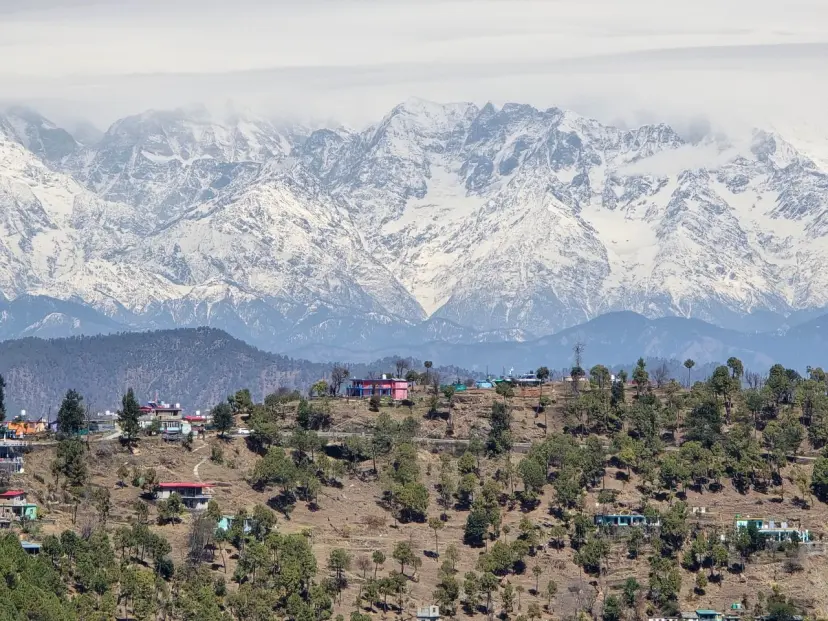
Ranikhet and Kausani are quieter hill towns with some of the best unobstructed Himalayan range views in the state; Kausani in particular is known for near-360-degree mountain panoramas from a single viewpoint.
Munsiyari, sometimes called "Little Kashmir," is genuinely remote — it's the base camp for treks like Milam Glacier and Khalia Top, and it's far enough off the standard circuit that road conditions and travel time need real planning rather than a quick weekend booking.
Binsar, a wildlife sanctuary with minimal light pollution, is one of the better stargazing spots in the state and a good add-on for Kumaon itineraries that already include Almora or Kausani.
Mukteshwar, Chaukori, and Pangot round out Kumaon's quieter side — Mukteshwar for orchards and temple views, Chaukori for tea gardens and Himalayan sightlines, Pangot for birdwatching (over 250 recorded species) just outside Nainital.
Jim Corbett National Park, technically Kumaon's most famous name after Nainital, is worth calling out separately since it's a wildlife trip rather than a hill-station one — different pacing, different booking lead time for safari slots.
Pilgrimage: Char Dham and Do Dham
This is its own category regardless of region, since the logistics (road vs helicopter, altitude, temple opening dates) differ from a standard leisure trip. The four shrines — Yamunotri, Gangotri, Kedarnath, Badrinath — typically open around Akshaya Tritiya (late April/early May) and close after Diwali, with May–June and September–mid-October the most reliable weather windows. Do Dham (just two of the four, usually Kedarnath-Badrinath or Gangotri-Yamunotri) is the shorter alternative if the full circuit doesn't fit your timeline. If you want the season-by-season breakdown in more depth, see our Char Dham timing guide.
So Which Region Actually Fits Your Trip?
First time in Uttarakhand, want the classics: Mussoorie or Nainital, 2-3 days.
Want scenery without the crowd: Chakrata, Kanatal, Kausani, or Chaukori over their more famous neighbours.
Serious trekker: Chopta-Tungnath for a shorter trek, Munsiyari or Har Ki Dun for a longer one.
Traveling with parents or young kids: stick to road-accessible hill stations rather than trekking bases or high-altitude Do Dham/Char Dham routes.
On a pilgrimage: decide road vs helicopter early — it changes your entire itinerary length and cost.
Planning a honeymoon: most of the above work, but a few destinations (Mussoorie, Kausani, Auli in winter) are specifically set up for couples — see our Uttarakhand honeymoon packages.
A Note on Cost
Package pricing in Uttarakhand tracks two things more than anything else: how remote the destination is, and whether you're going by road or helicopter. A Mussoorie or Rishikesh weekend sits at the low end; a full Char Dham by helicopter sits at the very top; everything else — Munsiyari, Chopta, Auli, Kumaon circuits — falls somewhere in between depending on distance and trip length.
Browse our full range of Uttarakhand tour packages — from Mussoorie weekends to Char Dham circuits — or get in touch directly if you want something built around one of the offbeat regions above; several (Munsiyari, Chakrata, Kanatal, Chopta) aren't in our standard package list yet but we can put together a custom itinerary.
Frequently asked questions
Is it better to visit Garhwal or Kumaon first?
Can I combine a Char Dham Yatra with a leisure stop like Mussoorie or Auli?
Are the offbeat places (Munsiyari, Chakrata, Chopta) hard to get to?
What's the safest time to avoid landslides and road closures?
Do I need permits for any of these regions?
About the author
Amit Aswal
Amit Aswal writes TravelBudie, drawing on years working in travel and hospitality and on trips he plans and takes himself. Destination guides and itineraries are based on firsthand travel. Visa, entry and regulatory guides are researched against official government sources and re-verified on a published schedule, and each one shows the date it was last checked.
Stay in the loop
Enjoy our travel stories? Add Travelbudie as a preferred source on Google.
You'll see more of our guides and tips when you search for travel inspiration.
Add as a preferred source on GoogleYour trip, your way
Ready to turn inspiration into an itinerary?
Tell us your dates, budget, and travel style — our team will craft a personalised trip plan built around what matters to you.
Your trip, your way
Ready to turn inspiration into an itinerary?
Tell us your dates, budget, and travel style — our team will craft a personalised trip plan built around what matters to you.
Travel inspiration
Get guides & deals in your inbox
Destination tips, seasonal itineraries, and exclusive offers — no spam, unsubscribe anytime.