Best Monsoon Treks in Jammu & Kashmir 2026
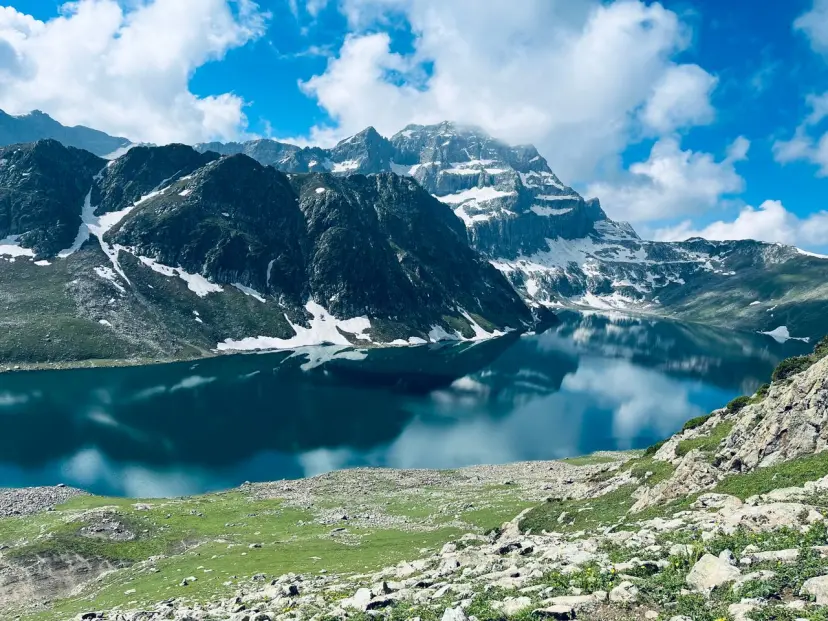
While most of the Indian Himalayas get drenched between July and September, Kashmir quietly enjoys its best trekking season of the year. The reason is geography: the Pir Panjal range acts as a wall that blocks most monsoon clouds from entering the Kashmir Valley. So while trails in Himachal and Uttarakhand turn slippery and landslide-prone, Kashmir's meadows are green, its alpine lakes are full, and rain usually arrives as short showers rather than all-day downpours.
That makes Jammu and Kashmir arguably the only region in India where the monsoon is the ideal trekking season, not something to avoid. The trekking window here is short — roughly July to mid-September — because snow covers the higher trails for the rest of the year. If you're planning a Himalayan trek this monsoon, these are the six trails worth building your trip around.
Quick note on safety and permits: Trekking access in Kashmir can change at short notice depending on the security situation and local administration orders. Always confirm current trail and permit status with your trek operator before booking.
Why Kashmir Is India's Best Monsoon Trekking Region
Rain shadow effect: The Pir Panjal range (roughly 288 km long) blocks most monsoon clouds. Kashmir gets scattered, short showers in July–August instead of continuous rain — most of its precipitation actually falls in winter from western disturbances.
Peak scenery: Meadows are at their greenest, wildflowers are in bloom, and snow-fed alpine lakes are at their fullest and bluest in July and August.
A short, precious window: July to mid-September is essentially the entire trekking season. By late September the valleys turn golden; by October, snow starts closing high passes.
Comfortable temperatures: Expect roughly 15–20°C on trail by day and 5–10°C at night at higher camps — cool days, cold nights.
Comparison at a Glance
Trek | Duration | Difficulty | Max Altitude | Base | Best For |
|---|---|---|---|---|---|
Kashmir Great Lakes | 7–8 days | Moderate–Difficult | ~13,800 ft | Sonamarg (from Srinagar) | Bucket-list lake scenery |
Tarsar Marsar | 6–7 days | Easy–Moderate | ~13,200 ft | Aru, Pahalgam | Lakeside camping, first big trek |
Nafran Valley | 7 days | Moderate–Difficult | ~13,800 ft | Aru, Pahalgam | Offbeat, fewer crowds |
Bodpathri–Tosamaidan | 5–7 days | Moderate | ~13,100 ft | Near Gulmarg/Budgam | Meadows, hidden lakes |
Gurez Valley | 4–6 days | Easy–Moderate | ~8,000 ft | Bandipora / Dawar | Culture + remote valleys |
Aharbal Falls & Kounsernag | 1–3 days | Easy | ~13,000 ft (Kounsernag) | Aharbal, Kulgam | Short trips, beginners |
1. Kashmir Great Lakes Trek (KGL)
If you do only one monsoon trek in your life, most trekkers would tell you to make it this one. Over seven days between Sonamarg and Naranag, the trail reveals seven alpine lakes one after another — Vishansar, Krishansar, Gadsar, the Satsar lakes, Nundkol, and Gangbal — each a different shade of turquoise and inky blue, set against snow-streaked peaks and endless meadows.
The monsoon months are exactly when KGL is at its best: the meadows are carpeted in wildflowers, the lakes are full from snowmelt, and — thanks to the rain shadow — you'll usually get sunshine between brief showers.
Duration: 7–8 days
Difficulty: Moderate to Difficult (long walking days, multiple passes around 13,000+ ft)
Best time: July to early September
Starting point: Sonamarg (about 3 hours from Srinagar)
Good to know: This is not a beginner's first trek — prior high-altitude or multi-day trekking experience helps a lot. Book early; monsoon batches fill quickly.
2. Tarsar Marsar Trek
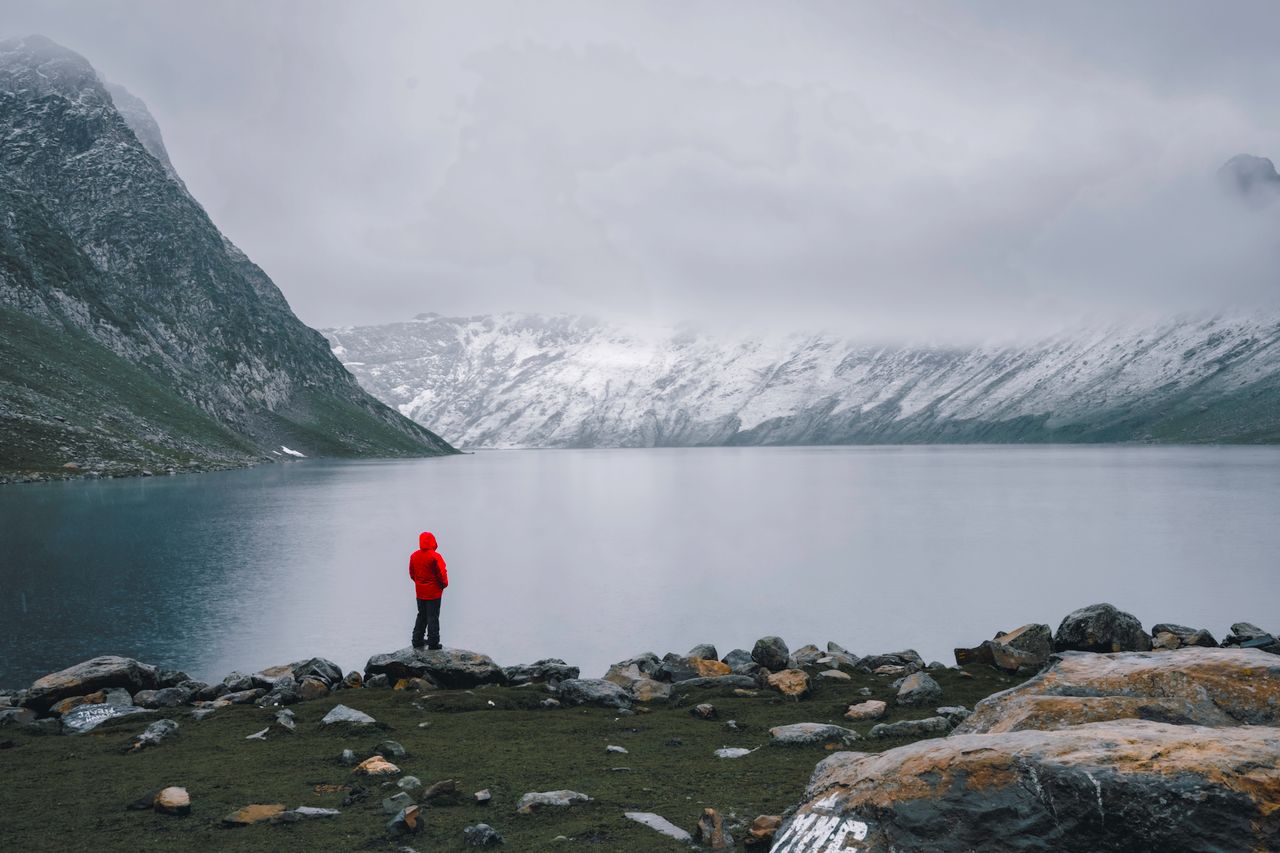
Often called the prettiest trek in India, Tarsar Marsar is KGL's gentler sister. Instead of a new lake every day, you get to actually camp beside the almond-shaped Tarsar Lake — something even KGL doesn't offer. The trail starts from the storybook village of Aru near Pahalgam and rolls through pine forests and wide meadows before reaching the twin lakes of Tarsar and Marsar.
It's quieter than KGL, slightly easier, and ideal if this is your first big Himalayan trek.
Duration: 6–7 days
Difficulty: Easy to Moderate
Best time: July to September
Starting point: Aru village, near Pahalgam (about 3–4 hours from Srinagar)
Good to know: Fit beginners can attempt this with a guided group. Nights by the lake get cold even in August — pack proper layers.
3. Nafran Valley Trek
Nafran is for trekkers who want Kashmir's lake-and-meadow magic without the crowds. The route climbs out of Aru into a valley that comparatively few trekkers have seen, with the trek's crown jewel being Harnag Lake, a glacial lake sitting beneath dramatic rock walls. On clear days you also catch views toward the Kolahoi Glacier, the largest glacier in the Kashmir Valley.
Camping a night beside Harnag, far from any trail traffic, is the kind of solitude that's getting rare on popular Himalayan routes.
Duration: 7 days
Difficulty: Moderate to Difficult
Best time: July to September
Starting point: Aru village, near Pahalgam
Good to know: Being offbeat means fewer facilities and fewer operators running it — hire an experienced local guide. Some days involve boulder sections and steep climbs.
4. Bodpathri–Tosamaidan Trek
A newer discovery on the trekking map, this route strings together the hidden Bodpathri lakes with Tosamaidan, one of the largest high-altitude meadows in Kashmir, tucked in the Pir Panjal range. The trail crosses vast grasslands dotted with Gujjar and Bakarwal shepherd huts, giving you a glimpse of pastoral Kashmiri life that the famous routes skip entirely.
In monsoon, the meadows here are almost unreasonably green, and boulder-hopping around the Bodpathri lakes has become a trekker favourite.
Duration: 5–7 days depending on the route
Difficulty: Moderate
Best time: July to September
Starting point: Villages on the Gulmarg/Budgam side
Good to know: Tosamaidan was a military firing range until 2014 and is now open to visitors — stick to marked paths with a local guide.
5. Gurez Valley Treks
Gurez is less a single trek and more a doorway to Kashmir's remotest corner. Sitting near the Line of Control beyond Razdan Pass, this valley of log-wood villages, the Kishanganga river, and the pyramid-shaped Habba Khatoon peak offers day hikes and multi-day routes through landscapes most Kashmiris themselves haven't seen. July and August are when the valley is at its most beautiful and the Razdan Pass road is reliably open.
Combine gentle valley walks with village homestays for a trek that's as much cultural immersion as adventure.
Duration: 4–6 days including travel from Srinagar
Difficulty: Easy to Moderate
Best time: July to early September (road access closes in winter)
Starting point: Dawar, Gurez (via Bandipora; about 6–7 hours from Srinagar)
Good to know: Indian nationals may need permits for certain areas near the LoC; foreign nationals face additional restrictions. Mobile network is limited — inform family before you go.
6. Aharbal Falls & Kounsernag Trek (Easy / Short Option)
Not everyone has a week. If you're in Kashmir during the monsoon with only a day or two to spare, head to Aharbal, often called the "Niagara of Kashmir," where the Veshaw river thunders down in full monsoon flow. From Aharbal, a 2–3 day round-trip trail leads to Kounsernag Lake, a high-altitude lake shaped — locals say — like a footprint, held sacred in local tradition.
Duration: 1 day (falls only) to 3 days (Kounsernag round trip)
Difficulty: Easy (falls) / Moderate (lake)
Best time: July to September
Starting point: Aharbal, Kulgam district (about 2.5–3 hours from Srinagar)
Good to know: A great "test trek" before committing to KGL or Tarsar Marsar.
What to Pack for a Monsoon Trek in Kashmir
Even in a rain-shadow region, you must prepare for showers:
Waterproof trekking shoes with strong grip, plus a rain jacket or poncho
Quick-dry layers and a warm fleece/down layer for nights (lakeside camps get cold)
Rain cover for your backpack + dry bags/ziplocks for electronics
Trekking poles — wet grass and boulder sections get slippery
Sunscreen and sunglasses (high-altitude sun between showers is harsh)
Personal first-aid kit and any altitude medication your doctor recommends
Water purification (tablets or filter) and a 2L water capacity
Frequently asked questions
Is it safe to trek in Kashmir during the monsoon?
Which is the best monsoon trek in Kashmir?
Which month is best — July, August, or September?
Can beginners do these treks?
Do I need permits?
How do I reach these treks?
About the author
Vikas Rawat
Stay in the loop
Enjoy our travel stories? Add Travelbudie as a preferred source on Google.
You'll see more of our guides and tips when you search for travel inspiration.
Add as a preferred source on GoogleYour trip, your way
Ready to turn inspiration into an itinerary?
Tell us your dates, budget, and travel style — our team will craft a personalised trip plan built around what matters to you.
Your trip, your way
Ready to turn inspiration into an itinerary?
Tell us your dates, budget, and travel style — our team will craft a personalised trip plan built around what matters to you.
Travel inspiration
Get guides & deals in your inbox
Destination tips, seasonal itineraries, and exclusive offers — no spam, unsubscribe anytime.