Non-Vegetarian Dishes You Can Try in Kerala
Non-Vegetarian Dishes You Can Try in Kerala: A Complete Local Guide
Kerala's reputation for elaborate vegetarian feasts sometimes overshadows a fact that surprises first-time visitors: this is one of the most meat- and seafood-forward states in India. A 2018 government survey put Kerala's vegetarian population at around 3% — one of the lowest in India — and the state's Christian, Muslim, and Hindu communities have each layered their own techniques onto a shared base of coconut, black pepper, and curry leaves. The result is a non-vegetarian cuisine that's regionally distinct — Malabar in the north leans into biryanis and Arab-influenced spicing, Central Kerala's Syrian Christian kitchens are known for dark, pepper-heavy roasts, and the coastline everywhere supplies some of the freshest seafood in India.
This guide covers the dishes worth prioritizing, organized by protein, with notes on regional origin and where they're best eaten.
Seafood: Kerala's Strongest Suit
With a coastline stretching more than 580 kilometers, seafood is where Kerala's non-vegetarian cooking is most confident.
Meen Curry (Fish Curry)
There's no single "Kerala fish curry" — nearly every coastal household has its own version — but the defining thread is kudampuli (Malabar tamarind), which gives the curry its deep red color and distinctive sourness. It's typically made with seer fish, mackerel, or sardines, simmered in a gravy built on red chili, turmeric, and shallots, and traditionally cooked in a clay pot (meen chatti) that's said to improve the flavor over repeated use.
Karimeen Pollichathu
Karimeen (pearl spot fish) is Kerala's official state fish, and pollichathu is arguably its most famous preparation. The fish is marinated in a spice paste — usually red chili, shallots, coconut oil, and lemon juice — then wrapped in a banana leaf and pan-grilled or steamed. The leaf keeps the fish moist while adding a faint smokiness, and this dish is closely associated with houseboat meals around Alleppey and Kumarakom.
Meen Moilee
A Syrian Christian specialty and a good option if you want seafood without heavy heat. Fish is cooked gently in a coconut milk gravy with green chilies, ginger, and curry leaves rather than red chili, making it noticeably milder and creamier than most other Kerala fish curries.
Njandu Curry (Crab Curry)
Crab cooked in a thick, spicy gravy built from roasted coconut, chili, and coriander — a highlight in coastal restaurants around Kochi and Kozhikode, usually eaten with rice or kappa and finished with a squeeze of lime.
Chemmeen Curry (Prawn Curry)
Prawns cooked in a coconut milk gravy, often with mustard seeds, black pepper, and tomatoes. Malabar's version tends to be spicier and tangier than the prawn curries found further south.
Kerala Fish Fry
A straightforward, widely available dish: fish marinated in red chili, pepper, and a touch of vinegar, then shallow-fried in coconut oil with curry leaves and mustard seeds until crisp. It's on almost every menu in coastal Kerala and a safe order if you're not sure what else to pick.
Kappa and Meen Curry
Boiled, mashed tapioca served alongside a spicy fish curry. Once considered humble, everyday food, it's now a celebrated combination in its own right — the starchy tapioca is a deliberate counterweight to the sharp, tangy curry.
Beef: A Kerala Signature
Kerala is one of the few Indian states where beef is widely and openly eaten, and it's cooked with real technique rather than treated as an afterthought.
Beef Ularthiyathu (Nadan Beef Fry)
Cubes of beef slow-cooked with coconut slices, crushed black pepper, and curry leaves until dark, dry, and intensely flavored. It's particularly associated with Central Kerala's Christian households and is almost always paired with Malabar porotta — a flaky, layered flatbread distinct from North Indian paratha. This combination is one of the dishes locals will most insist you try.
Buffalo Fry
A close cousin of beef ularthiyathu, made with buffalo meat slow-cooked with coconut, onion, and ginger-garlic paste, then finished with curry leaves for an earthy, aromatic edge. Also typically served with parotta.
Chicken: Everyday Comfort and Festive Showstoppers
Nadan Kozhi Curry
A country-chicken curry made with a blend of local spices — the everyday chicken dish you'll find in most home kitchens and neighborhood eateries, less elaborate than biryani but arguably more representative of daily Kerala cooking.
Kozhi Stew
A mild, coconut milk-based chicken curry, delicately spiced with cloves, cardamom, and cinnamon rather than chili. It's a Syrian Christian breakfast staple, traditionally paired with appam, and a good introduction if you want chicken without heat.
Kerala-Style Roast Chicken
Chicken marinated in a spicy paste and roasted until the gravy reduces down and coats the meat in a dark, dry finish. Works equally well as an appetizer or a main course.
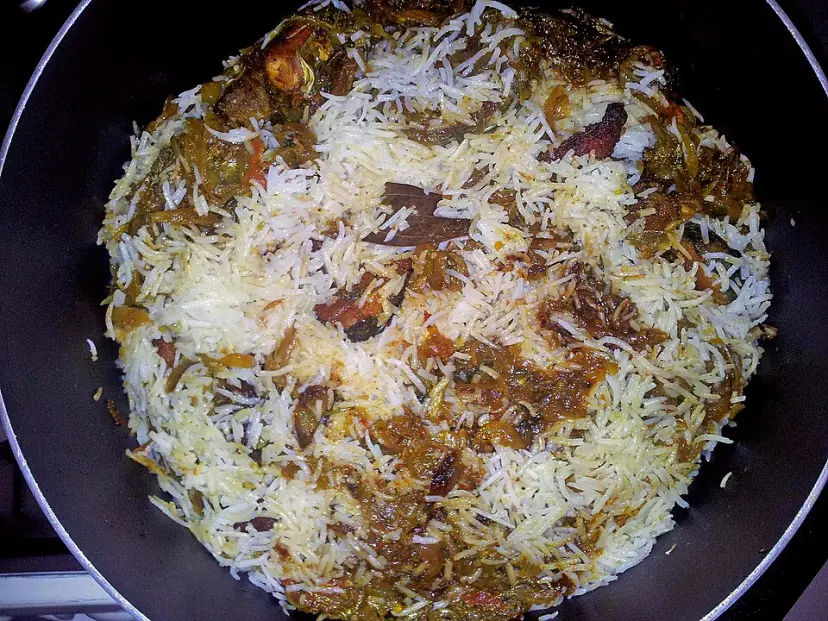
Malabar Chicken Biryani
Kerala's answer to India's many regional biryanis, and distinct from most of them. It's made with khyma rice (a short-grain variety) rather than long-grain basmati, and the spice profile reflects centuries of Arab trading influence along the Malabar coast — generally less oily and structured differently from Hyderabadi or Lucknowi biryani. It's traditionally served with a boiled egg and a side of pickle and raita.
Mutton and Duck
Erachi Curry (Mutton Curry)
A slow-cooked mutton curry, richly spiced and simmered until the meat is tender enough to fall off the bone — a staple at Kerala weddings and festive meals, and a good order if you want a heartier, longer-cooked non-vegetarian dish.
Duck Roast
A Central Kerala and Syrian Christian specialty, particularly associated with Kottayam and Kumarakom, where duck is cooked low and slow in a dark, pepper-forward gravy. It's less commonly found outside Kerala, which makes it worth seeking out specifically while you're there.
Egg Dishes Worth Knowing
Kerala Egg Roast
Boiled eggs simmered in a thick, spiced onion-tomato masala until the gravy clings to the eggs. It's a common breakfast item, usually eaten with appam or Malabar porotta, and a reliable, quick order if you want something non-vegetarian but light.
Pork (Where Available)
Pork is popular in Kerala's Christian and Anglo-Indian communities, particularly in Central Kerala, though it's less universally available than beef or chicken due to religious dietary restrictions among some communities. Where it does appear, it's often prepared similarly to beef ularthiyathu — slow-cooked with coconut, pepper, and vinegar for a tangy, dark finish.
A Quick Ordering Guide
Craving | Order This |
|---|---|
Classic seafood | Karimeen pollichathu or meen curry with rice |
Something spicy | Njandu curry (crab) or Malabar prawn curry |
Something mild | Meen moilee or kozhi stew |
Beef | Beef ularthiyathu with Malabar porotta |
A festive rice dish | Malabar chicken biryani |
Quick breakfast | Kerala egg roast with appam |
Practical Notes for Non-Vegetarian Travelers
Toddy shops (kallu shaps) are one of the best places to eat rustic, home-style non-vegetarian food — expect simple seating and excellent, unfussy cooking, often alongside locally fermented palm toddy.
Houseboats in Alleppey and Kumarakom typically include fresh-cooked meals with a local chef, making them a low-effort way to sample several seafood dishes in one sitting.
Malabar (Kozhikode, Thalassery, Kannur) is the region to prioritize if biryani and rich meat curries are your main interest; the coastal belt from Kochi to Alleppey is stronger for seafood specifically.
If you eat pork or beef, note that availability can vary by establishment and region, so it's worth asking rather than assuming a restaurant's full range is on the menu.
Final Thought
Kerala's non-vegetarian cooking rewards a bit of regional thinking: go coastal for seafood, go north to Malabar for biryani and rich meat curries, and seek out Central Kerala's Christian kitchens for beef ularthiyathu and duck roast. Between the fish curries, the beef fry, and a good Malabar porotta, it's a cuisine that holds its own against any non-vegetarian tradition in India.
Frequently asked questions
What is Kerala's most famous non-vegetarian dish?
Is beef commonly eaten in Kerala?
How is Malabar biryani different from other Indian biryanis?
Is Kerala seafood very spicy?
About the author

Amit Aswal
Amit Aswal writes TravelBudie, drawing on years working in travel and hospitality and on trips he plans and takes himself. Destination guides and itineraries are based on firsthand travel. Visa, entry and regulatory guides are researched against official government sources and re-verified on a published schedule, and each one shows the date it was last checked.
Stay in the loop
Enjoy our travel stories? Add Travelbudie as a preferred source on Google.
You'll see more of our guides and tips when you search for travel inspiration.
Add as a preferred source on GoogleYour trip, your way
Ready to turn inspiration into an itinerary?
Tell us your dates, budget, and travel style — our team will craft a personalised trip plan built around what matters to you.
Your trip, your way
Ready to turn inspiration into an itinerary?
Tell us your dates, budget, and travel style — our team will craft a personalised trip plan built around what matters to you.
Travel inspiration
Get guides & deals in your inbox
Destination tips, seasonal itineraries, and exclusive offers — no spam, unsubscribe anytime.