What to Eat in Kerala?
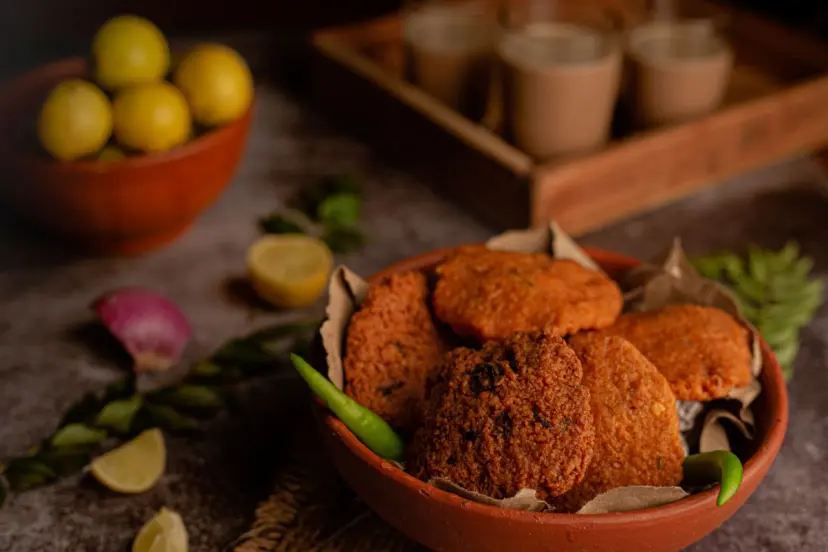
Kerala is known for its fresh seafood, coconut-based curries, aromatic spices, and traditional recipes that vary across the state. Whether you're enjoying Appam with Stew, Puttu and Kadala Curry, Kerala Sadya, Malabar Biryani, Karimeen Pollichathu, or Banana Chips, every dish reflects the region's coastal and cultural influences.
This guide covers the best foods to try in Kerala, from popular breakfast dishes and street food to seafood specialties, vegetarian meals, desserts, and festive favourites. You'll also learn where each dish is commonly served and what makes it a part of Kerala's culinary tradition, helping you make the most of your food experience during your trip.
Why Kerala Food Tastes the Way It Does
Kerala's cuisine is shaped by its geography, history, and cultural diversity. Bordered by the Arabian Sea on one side and the Western Ghats on the other, the state has easy access to fresh seafood, coconut, rice, and a wide variety of spices, including black pepper, cardamom, cinnamon, and cloves.
Centuries of trade with Arab, Chinese, Portuguese, and Dutch merchants also influenced Kerala's cooking traditions. Combined with the culinary practices of Hindu, Muslim, and Christian communities, these influences have created a cuisine that varies from one region to another while maintaining its distinct local identity.
Broadly, here's what you'll find:
Malabar (North Kerala) — Kozhikode, Thalassery, Kannur lean into biryanis, rich meat curries, and Arab-influenced sweets, a legacy of centuries of spice trade.
Central Kerala — Kochi, Thrissur mixes vegetarian and seafood traditions, including strong Syrian Christian influences (think meen pollichathu and duck roast).
South Kerala — Thiruvananthapuram, Kollam is where you'll find the most classic vegetarian sadya cooking and temple-town food culture.
Keep this in mind and it'll make sense why a "Kerala biryani" in Kozhikode tastes nothing like a vegetarian thali in Thiruvananthapuram. They're both authentically Kerala just from different culinary traditions within the state.
Want to explore these regions yourself? See our complete 7 days Kerala guide for where to go alongside what to eat.
Breakfast & Snacks Dishes In Kerala
Puttu and Kadala Curry
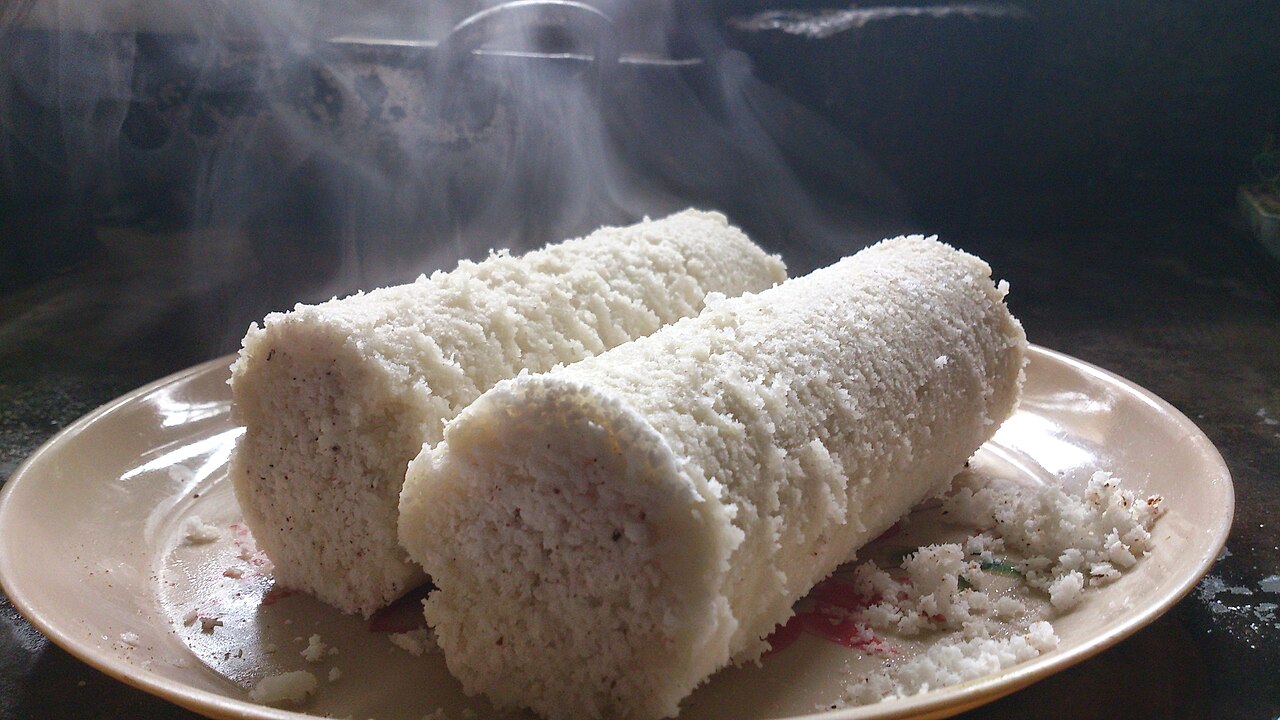
Puttu (steamed rice and coconut cylinders) paired with Kadala Curry (spicy black chickpeas), You'll see this one everywhere, it's the breakfast on nearly every home table and roadside eatery in Kerala. Mild, filling, and honestly a great place to start if you're easing into the cuisine rather than diving straight into the spicier stuff.
Appam and Stew
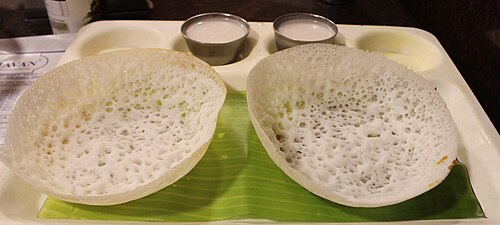
Appam is a bowl-shaped rice pancake, soft and slightly sour in the center, lacy and crisp at the edges made from a fermented rice batter. You'll usually get it with a vegetable or meat stew cooked in coconut milk and gently spiced with cinnamon, cardamom, and cloves rather than chili. The stew is meant to stay in the background here, it's there to complement the appam, not compete with it.
Idiyappam
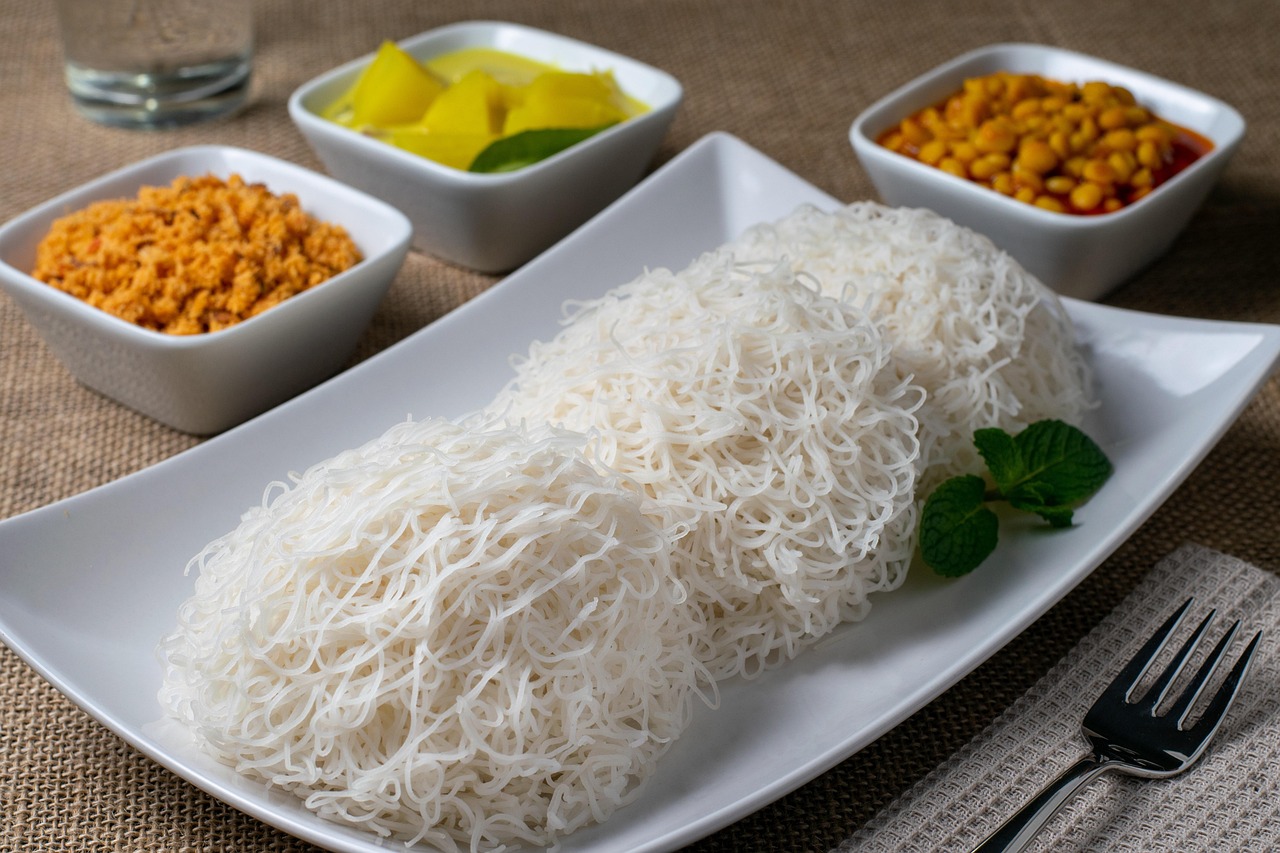
Also called "string hoppers" the rice flour pressed into thin noodle strands and steamed. You'll often get it with a coconut-milk curry, or just sweetened coconut and a banana if you want something lighter to kick off the day.
Dosa (Kerala-Style)
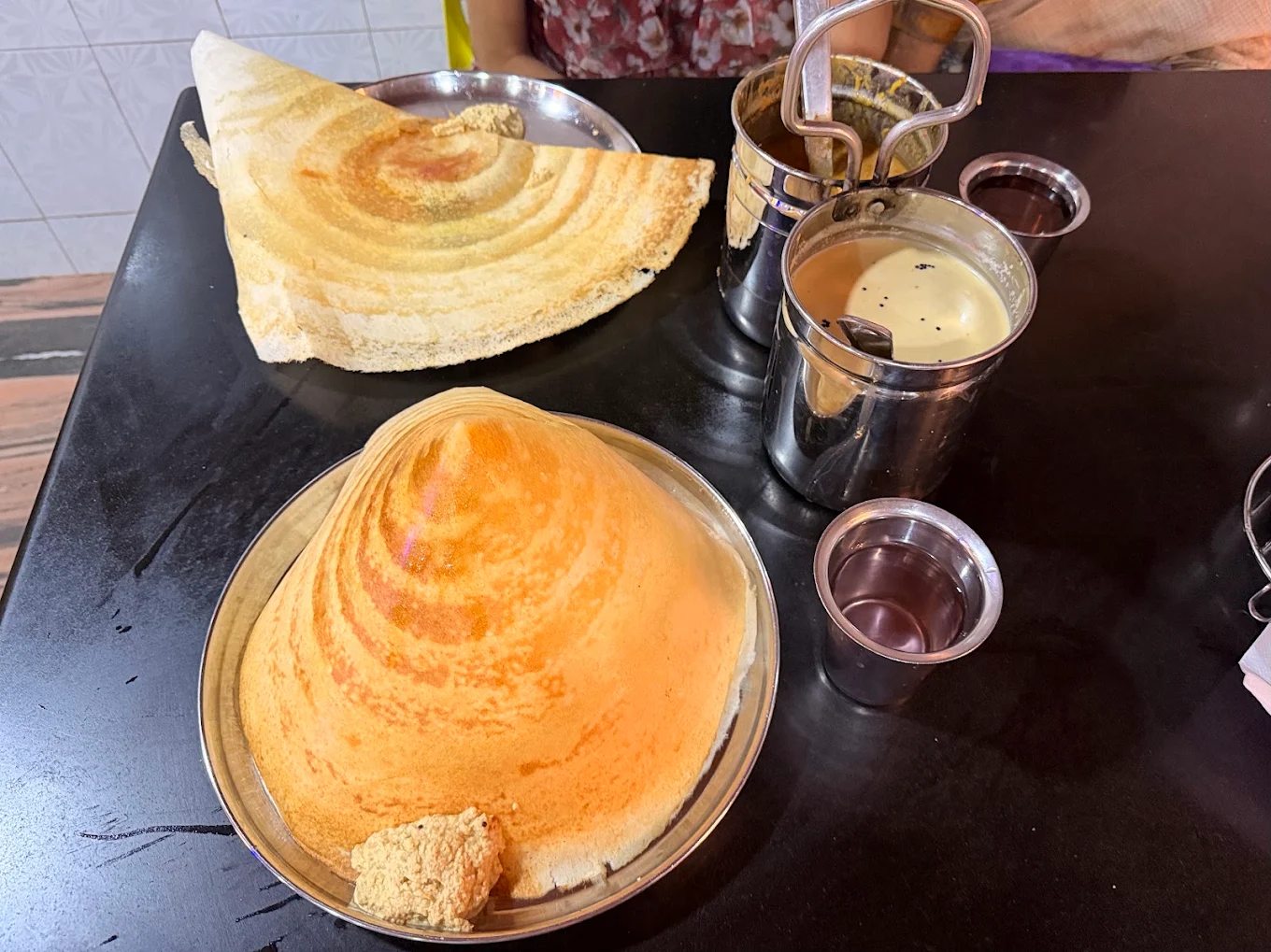
Dosa isn't exclusive to Kerala, but the state has its own spin on it, the ghee roast dosa, cooked crisp and deeply golden, paired with sambar and coconut chutney. You'll find some version of dosa on nearly every hotel breakfast spread here, and it's worth trying even if you've had dosa plenty of times elsewhere in India.
Curries and Everyday Dishes
Sadya
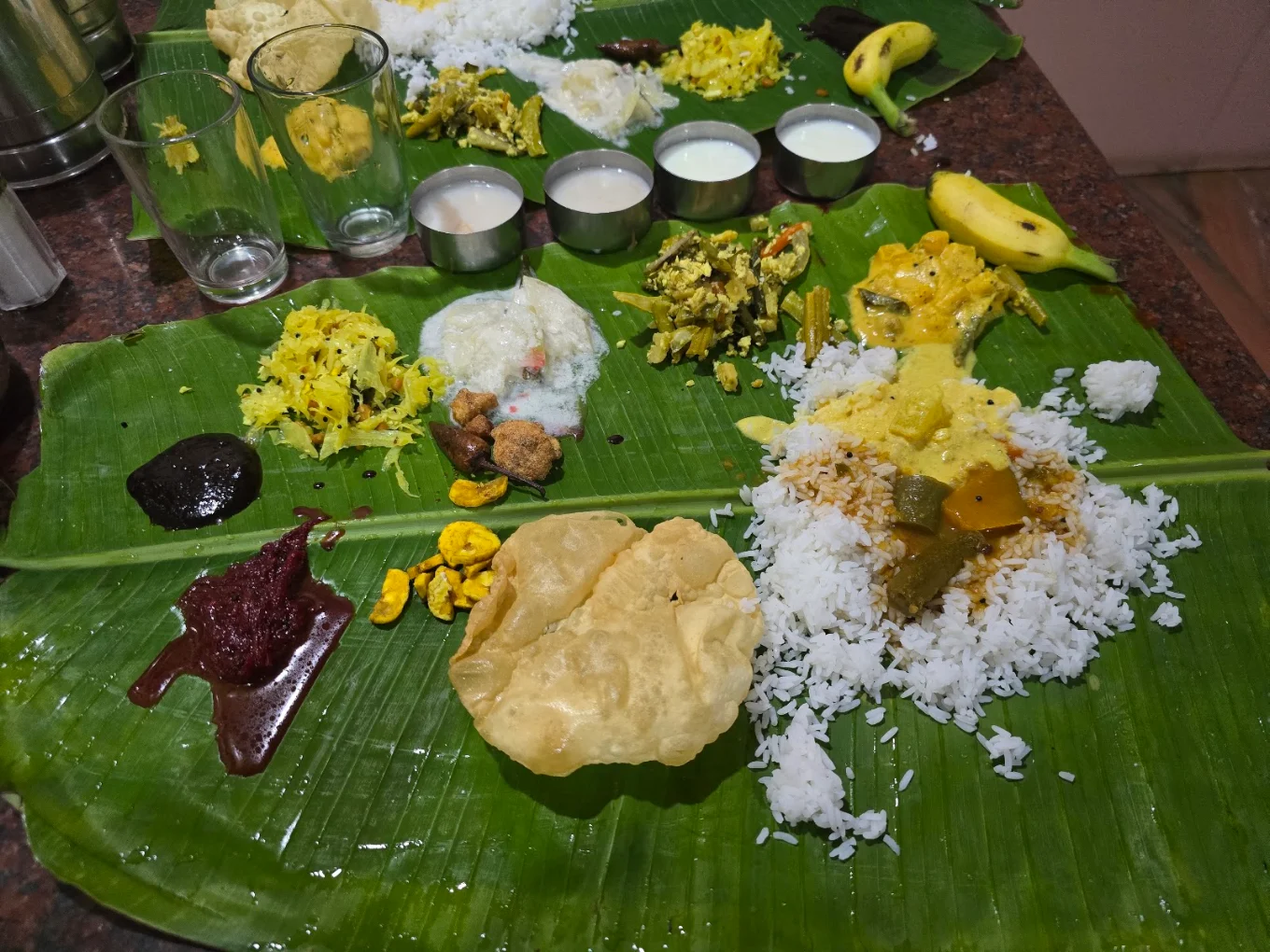
If you only eat one meal in Kerala with real intention, make it this one. Sadya is a vegetarian feast served on a banana leaf, and depending on where you have it, you could be looking at anywhere from 12 to nearly 28 dishes in a single sitting like sambar, rasam, avial, thoran, pachadi, and payasam among them, arranged to balance the six tastes recognized in Ayurvedic tradition: sweet, sour, salty, bitter, pungent, and astringent. It's most closely tied to Onam, Kerala's harvest festival, but plenty of restaurants serve their own version daily, especially at lunch. If you're in Thiruvananthapuram, Sree Krishna Café-style eateries are a safe bet for a consistent, well-executed spread.
Avial
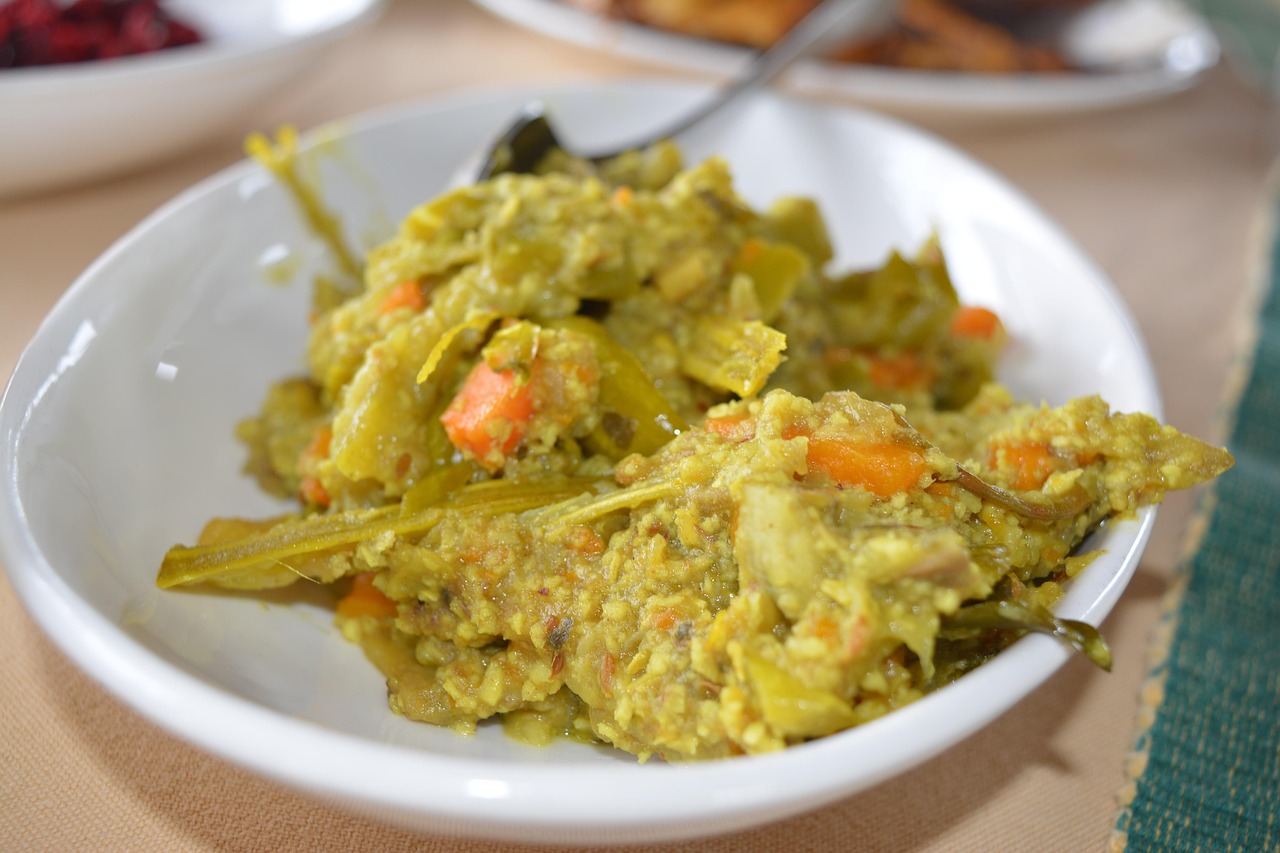
Think of this as a thick mixed-vegetable curry made with coconut, yogurt, and a light hand on the spices. It's a sadya staple, but you'll also see it as an everyday side dish. It's actually a good way to judge a place if their avial is well-balanced, the rest of their vegetarian menu usually holds up too.
Thoran
A dry stir-fry of finely chopped vegetables where cabbage, beans, or beetroot are the common ones which are tossed with grated coconut, mustard seeds, and curry leaves. This is the dry counterpart to all the wetter curries you'll find on a sadya plate or a regular thali.
Sambar and Rasam
Both are lentil-based, but they're doing different jobs. Sambar is a thicker vegetable-and-lentil stew, while rasam is a thin, peppery, tamarind-based broth you'll usually get toward the end of a meal to help with digestion. Kerala's sambar tends to run a bit sweeter and more coconut-forward than what you'd get in Tamil Nadu.
Seafood: Where Kerala Really Shows Off
With a 580-kilometer coastline, it's no surprise this is where Kerala's cooking hits hardest.
Meen Curry (Fish Curry) and Meen Moilee
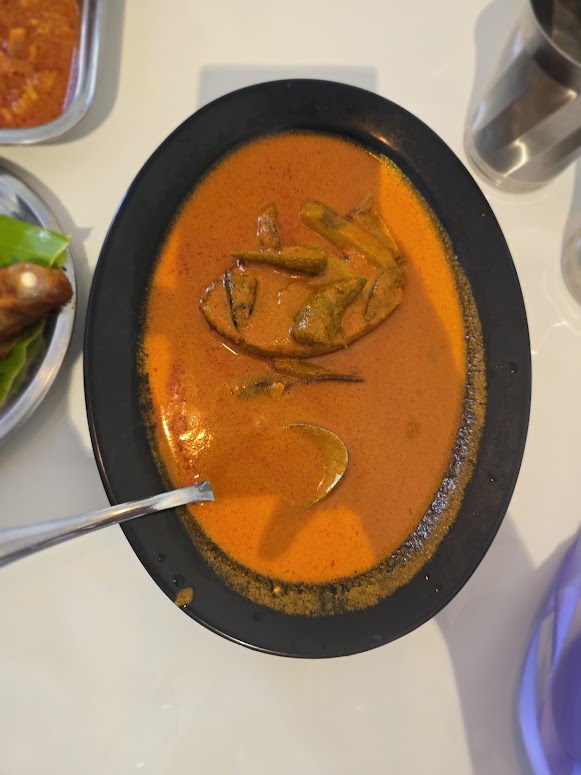
Fish curry changes a lot depending on where you are, the tangy, kudampuli (Malabar tamarind)-based version you'll find around Alleppey is sharp and sour, while meen moilee, a Syrian Christian dish, goes gentler with a coconut-milk base, green chilies, ginger, and curry leaves. You'll usually find both made with kingfish, pomfret, or seer fish.
Karimeen Pollichathu
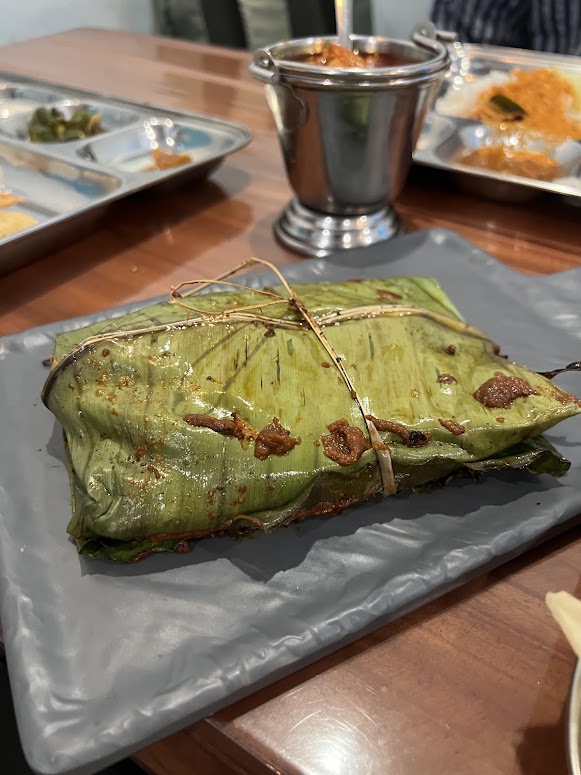
Pearl spot fish, marinated in a spice paste, wrapped in a banana leaf, and pan-grilled until the leaf itself picks up a light char. The banana leaf isn't just for show, it steams the fish while adding a faint smokiness you wouldn't get otherwise. You'll come across this a lot on houseboat meals around Alleppey and Kumarakom.
Kerala Fish Fry
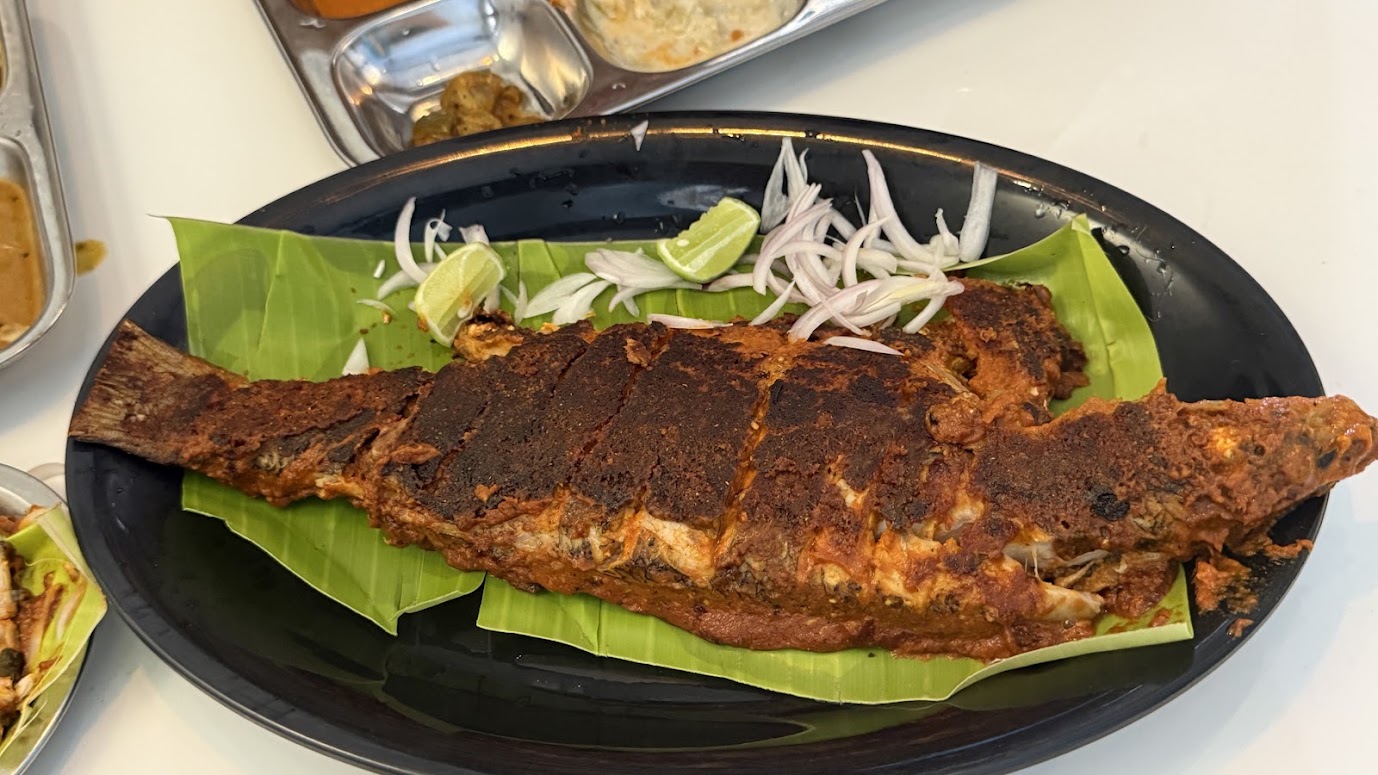
Straightforward, and honestly hard to go wrong with: fish (often pearl spot or sardine) marinated in red chili, pepper, and a touch of vinegar, then shallow-fried in coconut oil with curry leaves and mustard seeds until crisp. You'll see it on nearly every restaurant menu along the coast, a safe order any time you're not sure what else to pick.
Malabar Prawn Curry
Prawns in a coconut milk gravy with mustard seeds, black pepper, and tomatoes i.et. spicier and tangier than the fish curries. It's a Malabar-region specialty, so seek it out if you're in Kozhikode or Kannur.
For Meat Eaters: Beef, Chicken, and Duck
Kerala is one of the few Indian states where you'll find beef widely and openly on the menu, and Kerala-style beef fry (nadan beef), slow-cooked with coconut slivers, black pepper, and curry leaves until dark and richly spiced, is a dish locals are genuinely proud of. Pair it with a Malabar porotta (a flaky, layered flatbread, not the same thing as North Indian paratha) and you've got the classic combination.
Duck roast is another one worth knowing, a Central Kerala and Syrian Christian specialty, particularly around Kottayam and Kumarakom, cooked low and slow in a dark, pepper-heavy gravy.
Malabar Biryani
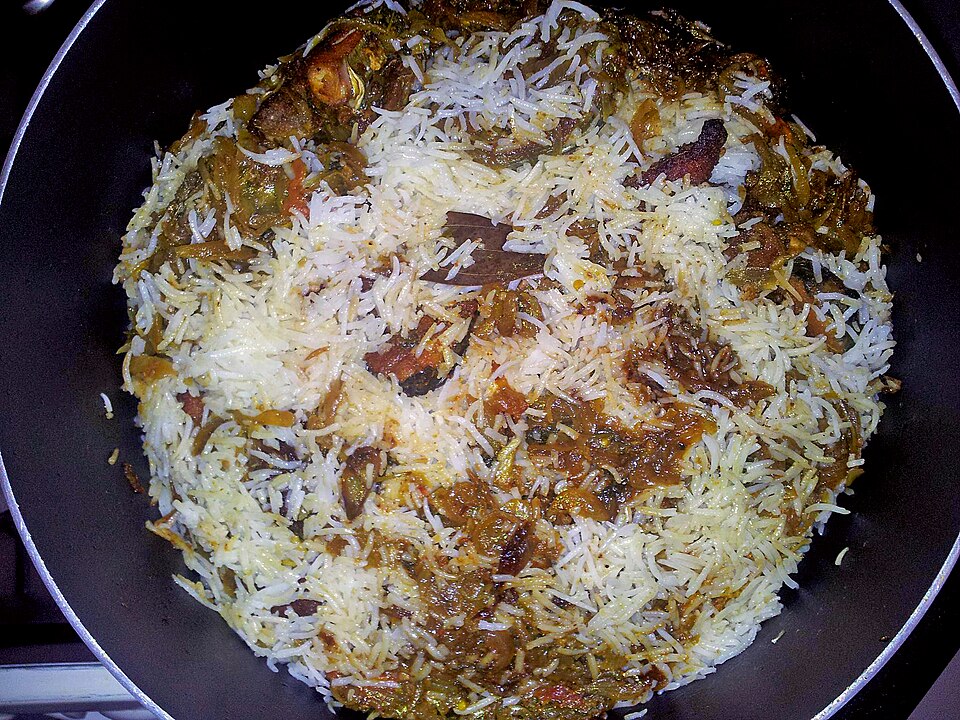
This one deserves its own callout. Unlike the layered, long-grain biryanis you'd find in Hyderabad or Lucknow, Malabar biryani (also called Thalassery biryani) uses short-grain khyma rice, cooked with a distinct spice blend shaped by centuries of Arab trading influence along the Malabar coast. You'll notice it's typically less oily and more aromatic than other Indian biryani styles.
Snacks and Street Food
Pazham Pori (Ethakka Appam) — Ripe banana slices dipped in a sweetened batter and deep-fried. You'll find this everywhere, from railway platforms to home kitchens, as the go-to teatime snack.
Kappa (Tapioca) with Fish Curry — Boiled and mashed tapioca served with a spicy fish curry. It's a genuinely everyday combination in a lot of Kerala households, especially along the coast is worth trying if someone offers it to you.
Banana Chips — Thin slices of raw banana fried in coconut oil, usually salted or spiced. Kerala's famous for these, and they travel well if you want to bring some home.
Kozhikode Halwa — A dense, chewy, slow-cooked sweet (not the semolina halwa you'll find elsewhere in India) that's a Kozhikode signature. Buy it fresh rather than packaged if you're passing through.
Dessert: Payasam
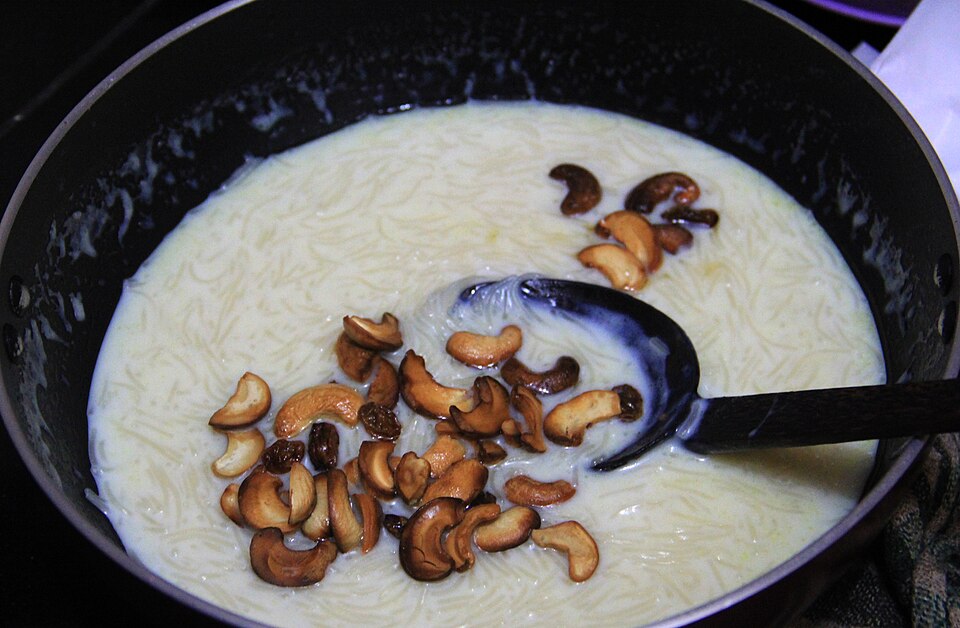
You won't get through a festive Kerala meal without payasam showing up a whole category of sweet, milk- or coconut-milk-based puddings made with rice, vermicelli, or lentils, sweetened with jaggery. Ada pradhaman (made with rice flakes and jaggery) is one of the more distinctive versions, and worth trying if you catch it during a sadya or a temple festival.
What Locals Actually Recommend Ordering First
If you've only got a day or two and want maximum flavor without the guesswork, here's the order I'd go in:
Appam and stew for breakfast
A vegetarian sadya for lunch, ideally on a banana leaf
Karimeen pollichathu or fish curry with rice for dinner
Pazham pori as an evening snack
Payasam whenever it's offered — don't wait for a special occasion to say yes
Want all of this covered for you? Our 6 Nights 7 Days Kerala Package is built around exactly this kind of food-forward route.
Where to Eat: A Few Practical Notes
Houseboats in Alleppey and Kumarakom usually include meals cooked fresh onboard by a local chef is an easy, low-effort way to sample several dishes in one sitting.
Toddy shops (kallu shaps) serve rustic, home-style non-vegetarian food alongside locally fermented palm toddy. Go here if you want something unpretentious and authentic.
Sree Krishna Café-style vegetarian restaurants in Thiruvananthapuram are reliable if you want a sadya-style meal outside of Onam season.
Meals at small local eateries ("thattukadas") tend to be considerably cheaper than at tourist-oriented restaurants — and honestly, often better, not worse.
Final Thought
Kerala's food doesn't need much dressing up to make an impression, the coconut, the spices, and the seafood do all the work on their own. My honest advice: eat where the locals eat, don't skip breakfast, say yes to sadya at least once, and let a plate of fish curry and rice be the meal your whole trip gets built around.
Ready to taste it for yourself? Browse our Kerala tour packages and build a trip around the food.
Frequently asked questions
Is Kerala food very spicy?
Is Kerala good for vegetarians?
What's the difference between Kerala biryani and other Indian biryanis?
When is the best time to try a full sadya?
About the author

Amit Aswal
Amit Aswal writes TravelBudie, drawing on years working in travel and hospitality and on trips he plans and takes himself. Destination guides and itineraries are based on firsthand travel. Visa, entry and regulatory guides are researched against official government sources and re-verified on a published schedule, and each one shows the date it was last checked.
Stay in the loop
Enjoy our travel stories? Add Travelbudie as a preferred source on Google.
You'll see more of our guides and tips when you search for travel inspiration.
Add as a preferred source on GoogleYour trip, your way
Ready to turn inspiration into an itinerary?
Tell us your dates, budget, and travel style — our team will craft a personalised trip plan built around what matters to you.
Your trip, your way
Ready to turn inspiration into an itinerary?
Tell us your dates, budget, and travel style — our team will craft a personalised trip plan built around what matters to you.
Travel inspiration
Get guides & deals in your inbox
Destination tips, seasonal itineraries, and exclusive offers — no spam, unsubscribe anytime.