Champakulam Boat Race in Kerala
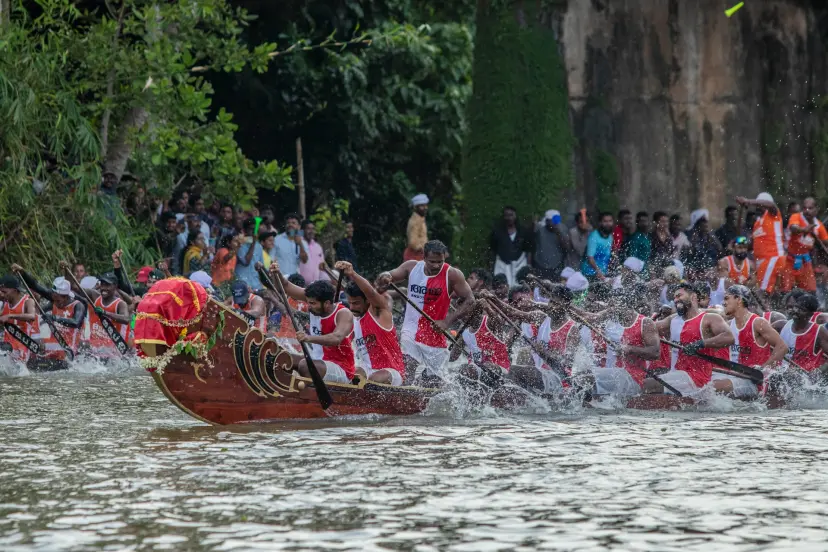
Champakulam Boat Race in Kerala: The Complete Guide to India's Oldest Snake Boat Race
Long before the Nehru Trophy turned snake boat racing into a nationally televised spectacle, there was Champakulam. Held on the Pamba River in a quiet village in Alappuzha district, the Champakulam Boat Race is widely regarded as the oldest of Kerala's vallam kali (boat race) traditions, with origins traced back roughly four centuries. It's also the race that unofficially opens the state's boat race season each year, setting the tone — and often the early form guide — for the bigger, more crowded events that follow in August and September.
Unlike some of Kerala's more commercialized boat races, Champakulam has held onto a genuinely local, ritual-driven character. It isn't built around a trophy sponsor or a tourism campaign; it exists because a centuries-old religious procession once stopped here for the night, and the village has been commemorating that night ever since.
The Origin Story
The race's history is tied directly to the Sree Krishna Swamy Temple in nearby Ambalappuzha. According to the traditional account, the king of Chempakasseri had installed an idol of Lord Krishna at the newly built temple, only to be told by his priests that the idol was inauspicious. A replacement was identified at the Kurichi Karikkulam Parthasarathy Temple — an idol believed to have originally been gifted to Arjuna by Krishna himself — and the king's minister set out with a small delegation to bring it back.
On the return journey, fearing bandits, the group stopped for the night at the home of a local resident named Mappilassery Itty Thommen in Champakulam village. The king himself joined them the next morning, and the idol was then escorted onward to Ambalappuzha in a grand, boat-led procession — the very event the race commemorates today.
That link between the temple and the village hasn't faded with time. Every year, a delegation from the Ambalappuzha temple still visits the Mappilassery family home in Champakulam, carrying palpayasam — a sweet dessert closely associated with the Ambalappuzha temple — as a ritual offering before the race begins.
From Village Ritual to State Institution
Champakulam's transition from a purely local observance to a recognized state event happened gradually over the 20th century:
1927 — The race was formally inaugurated by M. E. Watts, then Diwan (chief minister) of the princely state of Travancore.
1952 — Sree Chithira Thirunal Bala Rama Varma, the last ruling king of Travancore, attended the race and instituted the Rajapramukhan Trophy, which remains the event's premier prize to this day.
That royal patronage helped cement Champakulam's status as the season opener — the race that other clubs treat as an early benchmark before the larger Nehru Trophy Boat Race (held on Punnamada Lake in August) and the Aranmula Boat Race (held further up the Pamba between mid-August and September).
What Actually Happens on Race Day
The race is held on Moolam day in the Malayalam month of Mithunam (also spelled Midhunam) — a date fixed by the traditional Malayalam calendar rather than the Gregorian one, which is why it shifts slightly year to year, typically falling somewhere in late June or the first half of July.
The day itself follows a fairly consistent structure:
Rituals and offerings at the Champakulam Madathil Temple and the Mappilassery family home, continuing the palpayasam tradition.
A ceremonial flag-off, usually presided over by local political and district officials.
The race itself, contested primarily by chundan vallams — the long, narrow, upward-curving "snake boats" that give this style of racing its name. These vessels can stretch past 100 feet and carry crews of over 100 rowers, along with a helmsman and a group of singers who lead the crew through the vanchipattu, the traditional boat songs that set the rowing rhythm.
The finish and trophy presentation, with the Rajapramukhan Trophy awarded to the winning boat club.
The scale is genuinely difficult to picture until you're standing on the riverbank: a fully crewed chundan vallam moving at speed, oars breaking the water in perfect unison to a chanted rhythm, is one of the more physically impressive sights in Indian sport, let alone Indian festival culture.
The 2026 Race
This year's edition was held on June 29, 2026, continuing the tradition on Moolam Nakshatra day in the Malayalam month of Mithunam. The Rajapramukhan Trophy went to Aroma Chundan, a newly built snake boat rowed by the Aroma Boat Club under the captaincy of Ranjith Sajeevan, in a close final sprint. Fourteen vessels took part in total, including seven full-sized chundan vallams. As is typical, the results are already being treated as an early form guide by clubs preparing for the Nehru Trophy race and other league fixtures later in the season.
How Champakulam Compares to Kerala's Other Boat Races
Kerala hosts close to twenty boat races through the monsoon and Onam season, but a handful stand out, and it's worth knowing how Champakulam fits among them:
Race | Typical Timing | What Makes It Distinct |
|---|---|---|
Champakulam Moolam | Late June – mid-July | Oldest of the major races; opens the season; deeply ritual, less commercialized |
Nehru Trophy Boat Race | Second Saturday of August | Kerala's largest and most competitive race; held on Punnamada Lake |
Aranmula Boat Race | Mid-August – September | Tied to the Aranmula Parthasarathy Temple; uses palliyodams rather than chundan vallams; includes the Aranmula Valla Sadya, a feast served on the boats |
Payipad Boat Race | September | Commemorates the installation of an idol at Haripad Subramanya Temple; held on the Payipad river |
If your goal is to see the most spectacle and don't mind large crowds, Nehru Trophy is the bigger show. If you want something closer to how these races actually functioned before they became tourist events, Champakulam is the better choice.
Planning a Visit
Getting there:
By air — Cochin International Airport is roughly 98–100 km away, the nearest major airport.
By rail — Alappuzha Railway Station is about 15 km from Champakulam.
By road — Alleppey (Alappuzha) Bus Station is roughly 15 km away.
By water — Champakulam is well connected by backwater boat services to Alleppey, Kollam, Changanassery, Kumarakom, and Kochi, which is arguably the most fitting way to arrive for a boat race.
When to go: Since the date follows the Malayalam calendar rather than a fixed Gregorian date, confirm the exact day close to your travel dates through Kerala Tourism or local sources — it typically falls in late June or early-to-mid July, but this can shift by a week or two year to year.
Where to stay: Alleppey town, about 15 km away, has the most accommodation options, including a number of houseboat operators. Staying on a houseboat the night before and cruising in toward Champakulam on race morning is a popular way to combine the backwaters experience with the race itself.
Viewing tips:
Arrive early — the ceremonial rituals and flag-off happen well before the race itself, and riverbank space fills up as the morning goes on.
The best vantage points are along the finishing stretch, where the boats are moving at full speed and the crowd energy peaks.
Expect heat and monsoon humidity; light clothing, water, and sun protection matter more than an umbrella, since race day usually falls in a relatively dry window between monsoon showers.
Local stalls around the venue typically sell Kerala snacks and light meals, so you don't need to plan around a formal restaurant stop.
Pair the boat race with a backwaters stay. See our Kerala Honeymoon Packages for Alleppey houseboat itineraries.
Final Thought
Champakulam won't give you the scale of the Nehru Trophy race or the ceremonial grandeur of Aranmula, and that's precisely the appeal. What you get instead is the race in something close to its original form — a village honoring a centuries-old promise, with a trophy, a temple procession, and a river full of oarsmen rowing to a song that's been sung here for generations.
Frequently asked questions
Is Champakulam really the oldest boat race in Kerala?
What's the difference between a chundan vallam and other race boats?
Can tourists attend the Champakulam Boat Race?
What is the Rajapramukhan Trophy?
About the author
Amit Aswal
Amit Aswal writes TravelBudie, drawing on years working in travel and hospitality and on trips he plans and takes himself. Destination guides and itineraries are based on firsthand travel. Visa, entry and regulatory guides are researched against official government sources and re-verified on a published schedule, and each one shows the date it was last checked.
Stay in the loop
Enjoy our travel stories? Add Travelbudie as a preferred source on Google.
You'll see more of our guides and tips when you search for travel inspiration.
Add as a preferred source on GoogleYour trip, your way
Ready to turn inspiration into an itinerary?
Tell us your dates, budget, and travel style — our team will craft a personalised trip plan built around what matters to you.
Your trip, your way
Ready to turn inspiration into an itinerary?
Tell us your dates, budget, and travel style — our team will craft a personalised trip plan built around what matters to you.
Travel inspiration
Get guides & deals in your inbox
Destination tips, seasonal itineraries, and exclusive offers — no spam, unsubscribe anytime.