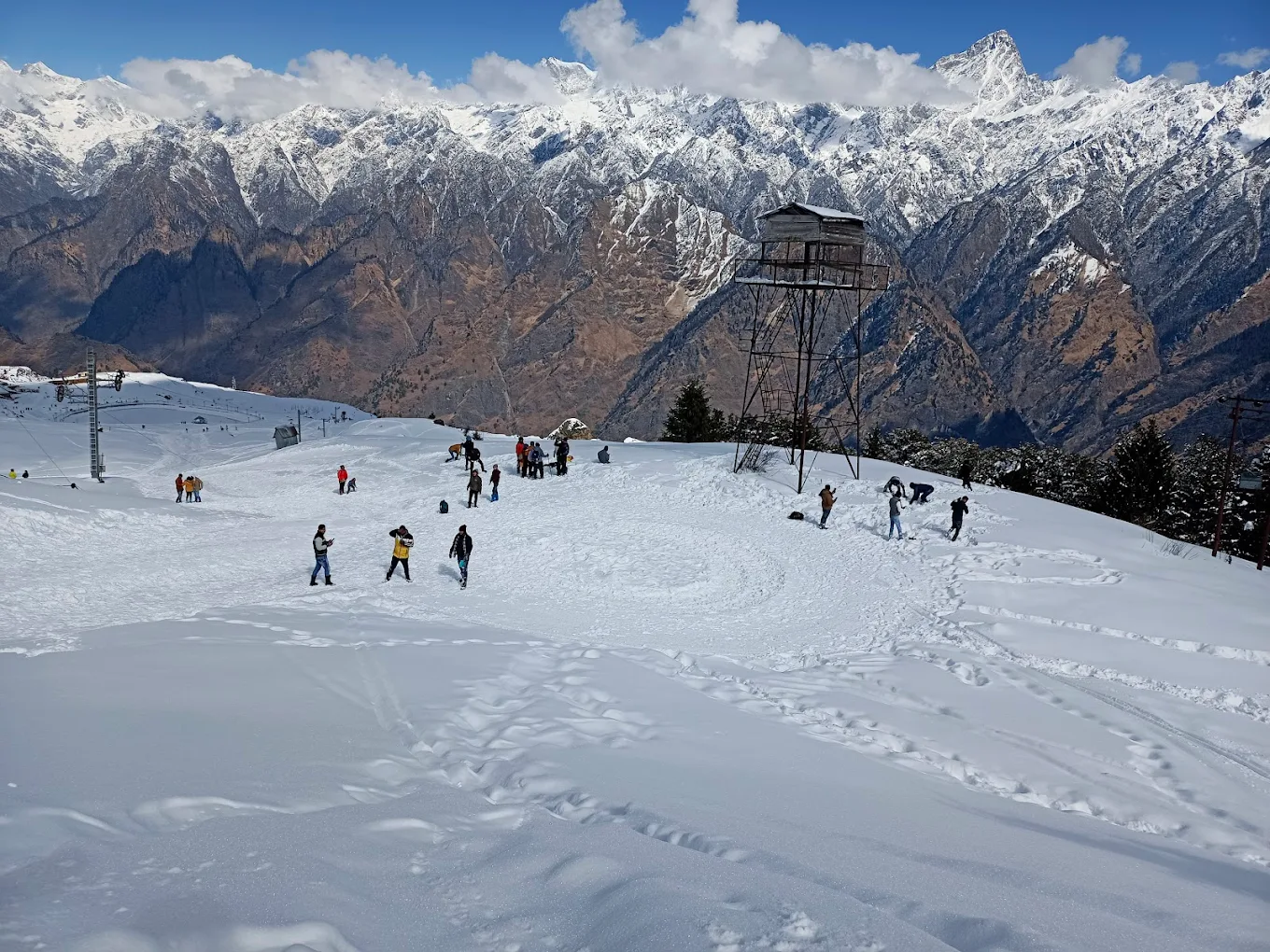
Manali sits at about 2,050 m on the banks of the Beas, at the top of the Kullu valley, with the Pir Panjal closing the view to the north. It has been the default Indian hill holiday for forty years, which means two things at once: it is genuinely beautiful, and it is busy, commercialised and full of people trying to sell you a snow point.
This guide is written to get you past that. What a trip costs, when to go, what the Rohtang permit rules actually are, how long you need, and which of the famous sights are worth the drive. If you want the wider picture first, start with our Himachal destination hub.
How many days do you need in Manali?
Three nights is the working minimum. One day for Manali town and the temples, one for Solang and the valley, one for the Atal Tunnel and the Lahaul side.
Four nights is the comfortable version. It adds Naggar, or a proper walking day, or the slack to lose half a day to weather without losing a sight.
Five nights or more if you want Rohtang as well as the tunnel, or a short trek, or if you are pairing Manali with Shimla on a road loop. Most Shimla plus Manali itineraries run five to six nights in total, which is what our Shimla Manali 5N/6D package covers.
Two nights is not enough. You will spend a full day arriving and most of another leaving.
What a Manali trip costs in 2026
Ranges below are typical published rates for two people, checked September 2026, excluding travel to Himachal. Hill rates move a lot with season, and the last week of December through the first week of January is effectively a separate market where hotel rates commonly double. Treat these as planning bands, not quotes.
| Style | Stay, per night | Food, per day | Local transport, per day | 4 nights, two people |
|---|---|---|---|---|
| Budget: Old Manali guesthouse, shared cabs | ₹1,200 to ₹2,500 | ₹800 to ₹1,200 | ₹500 to ₹1,000 | ₹15,000 to ₹25,000 |
| Mid range: 3 star near Mall Road or Aleo | ₹3,000 to ₹6,000 | ₹1,500 to ₹2,500 | ₹2,500 to ₹3,500 private cab | ₹32,000 to ₹52,000 |
| Comfortable: riverside resort, Prini or Solang side | ₹7,000 to ₹15,000 | ₹2,500 to ₹4,000 | ₹3,500 to ₹4,500 | ₹60,000 to ₹1,00,000 |
Three things sit outside the table and catch people out. Adventure activities are extra and are charged per person per activity. A Rohtang day costs roughly ₹4,000 to ₹6,500 for a permitted taxi, because the permit quota makes it a seller's market. And peak season Volvo fares from Delhi can be double the off-season fare.
Booked as a package, a Himachal trip currently starts around ₹25,000 per person on our Himachal tour packages page, which folds stays, private cab and transfers into one price. Whether that beats self-planning depends almost entirely on whether you would otherwise be hiring a cab daily.
The best time to visit Manali
The old advice that Manali is good in summer and good in winter is true but useless, because the two seasons give you completely different trips and only one of them has Rohtang open.
| Window | Weather | What is open | Best for |
|---|---|---|---|
| March to June | 10°C to 25°C, cool nights | Everything. Rohtang usually opens late May, sometimes early June | First trips, families, adventure activities |
| July to mid September | Warm, heavy rain | Landslide risk on the Kullu highway is real and roads close without notice | Low rates, green valley, flexible travellers only |
| Late September to November | 5°C to 20°C, clear | Rohtang closes with the first heavy snow, usually November. Atal Tunnel stays open | The best light of the year, thin crowds |
| December to February | Below freezing at night | Rohtang closed. Snow in town is not guaranteed before late December | Snow, though Solang not Rohtang is where you will find it |
The honest version: if you want snow, come in January or February and go to Solang or through the tunnel to Sissu. If you want Rohtang Pass itself, come between late May and October. You cannot have both in one trip.
Rohtang's opening and closing dates are set by the administration each year based on snow clearance and are announced only a few weeks ahead. Check before you fix dates around it.
Places to visit in Manali
Distances are road distances from Manali bus stand. Hill roads mean an hour for 20 km is normal.
Old Manali, 3 km
Above the town across the Manalsu, and still the nicest part of Manali to spend an evening in. Apple orchards, slate roof houses, cafés along one street. It empties out in deep winter when many places close. Walkable from Mall Road if you do not mind the climb.
Hadimba Devi Temple, 3 km
A four tiered pagoda in cedar forest, built in the mid sixteenth century, dedicated to Hadimba of the Mahabharata. The building itself is the reason to go, and the deodar grove around it is the quietest place in central Manali. Go early. By eleven it is a queue and a photo line.
Manu Temple, 3 km
In Old Manali, up a steep lane. Dedicated to the sage Manu, who the town is named for. Small, quiet, and mostly worth it for the walk up through the village rather than the shrine itself.
Vashisht village and hot springs, 3 km
Sulphur hot springs feeding stone bathing tanks, with an old Vashisht temple beside them and a wood carved Ram temple next door. The tanks are free and separated by gender. They are also, depending on the day, extremely crowded. Several guesthouses in the village pipe the spring water into private baths, which is the more comfortable version of the same thing.
Jogini Falls, 5 km to the trailhead
A short walk uphill from Vashisht, about 45 minutes each way through orchards and pine, ending at a waterfall in a side gorge. This is the easiest real walk near Manali and the best half day for anyone who wants to be outside rather than in a car. Wear something with grip. The last stretch is wet rock.
Solang Valley, 13 km
The activity meadow. Paragliding, zorbing, the ropeway, ski slopes in winter, and in season a dense crowd of operators. Genuinely spectacular when the snow is down and the crowd is not. Go early in the day and walk five minutes away from the main clearing to see why people came here in the first place.
Atal Tunnel and the Lahaul side, 25 km to the south portal
The most important change to travelling in this valley in decades and the reason a Lahaul day trip is now possible in winter at all. The tunnel is 9.02 km long at an elevation of 3,100 m, which makes it the longest highway tunnel above 10,000 feet in the world, and it opened in October 2020. It runs under the Rohtang ridge and comes out at Sissu.
No permit is needed to drive through the tunnel. That is the single most useful fact on this page. Sissu, with its waterfall and the flat Chandra valley behind it, is 40 km from Manali and is where most people who say they went to the snow actually went.
Rohtang Pass, 51 km
At 3,978 m, on the old trade route into Lahaul. Open roughly late May to November, permit required, quota limited, and a completely different experience from the tunnel: high, bare, cold and enormous. Whether it is worth the day depends on how you feel about a four hour round trip in a queue of taxis. See the permit section below before you plan it.
Naggar, 22 km
The old Kullu capital, with a castle of stone and deodar now run as a hotel, and the Roerich art gallery in the estate above it. The quietest half day near Manali and the one most people skip. Do it on the way in or out rather than as a return trip.
Manali Wildlife Sanctuary, 2 km
A 31.8 sq km reserve running up the Manalsu behind Old Manali, with brown bear, musk deer and leopard on the species list and a very low chance of seeing any of them. Go for the forest walk, not the wildlife.
Rohtang Pass permits: the rules that catch people out
This is where Manali itineraries fall apart. Rohtang has been under a permit system since the National Green Tribunal capped traffic, and the caps are strict.
As published by the Manali Tourism Development Council on the official portal, rohtangpermits.hp.gov.in, and checked September 2026:
Daily quota: 800 petrol and 400 diesel vehicles, split across two slots, 10:00 and 16:00.
Fee: ₹500 per vehicle, plus a congestion charge of ₹50 for cars, jeeps and MUVs, ₹100 for buses.
Booking opens two days ahead only. You cannot book weeks in advance.
Three permits per vehicle per week, Tuesday to Monday.
Vehicles over 10 years old are not permitted.
A valid ID and a current PUC certificate are required.
What this means in practice: you will almost certainly go with a local taxi that holds a permit rather than in your own car, you should decide on Rohtang two to three days before you want to go, and you should have the tunnel and Sissu as your backup plan, because on a busy weekend the quota is gone.
Rules and fees are revised by the administration without much notice. Confirm on the official portal before you pay anyone.
Adventure activities and what they cost
Rates below are the range of published prices in September 2026. They vary by flight length, season and how well you negotiate, and roadside quotes at Solang are routinely higher than booked-ahead rates.
| Activity | Where | Typical range, per person |
|---|---|---|
| Paragliding, short flight | Solang, Dobhi | ₹1,500 to ₹3,000 |
| Paragliding, high flight | Solang | ₹3,500 to ₹5,000 |
| River rafting, 7 km to 14 km | Beas, Pirdi near Kullu | ₹600 to ₹1,500 |
| Zorbing | Solang | ₹400 to ₹800 |
| Ropeway or cable car | Solang | ₹600 to ₹900 |
| Skiing with instructor, winter | Solang | ₹1,500 to ₹3,500 |
| Mountain biking, half day | Manali and around | ₹1,200 to ₹2,500 |
Two safety notes worth more than the prices. Check that a paragliding operator is registered with the Himachal tourism department and that your pilot has a licence, and do not accept a flight in high wind because the operator has a queue. For rafting, the Beas runs high and fast in June and after heavy rain, and reputable operators stop running on those days. If yours does not, that is information about the operator.
Where to stay in Manali
The area matters more than the star rating here.
Old Manali for cafés, walkability and a young crowd. Quiet in winter because much of it shuts. Mall Road and the bazaar for convenience and the shortest transfers, and for traffic and noise. Aleo and Prini, across the river on the Naggar road, for space and river views ten minutes from town. Solang side, at Palchan or Burua, if the point of the trip is snow and early starts, though you are committing to a drive for every dinner. Naggar if you want the valley without Manali at all.
Getting around
Local buses run the main valley routes and are cheap and slow. Autos exist but are not metered, so agree the fare first. Most visitors end up hiring a car with a driver for full days at roughly ₹2,500 to ₹4,500 depending on the route, with Rohtang priced separately and higher. Self drive is fine on the main highway and not recommended on the Rohtang road in season.
Mall Road is closed to traffic in parts through the evening, which is pleasant to walk and a nuisance if your hotel is behind the barrier with luggage.
How to reach Manali
For the full picture on entry points into the state, see our guide on how to reach Himachal Pradesh.
By road, which is how nearly everyone comes
Delhi to Manali is about 530 km on NH 3 through Chandigarh, Bilaspur, Sundernagar, Mandi and Kullu. Overnight Volvo and Scania coaches run by HRTC and HPTDC leave Delhi ISBT Kashmere Gate and Himachal Bhawan in the early evening and arrive in the morning. Fares in the ₹1,300 to ₹2,200 band are typical off peak, with peak season and premium seats higher. Book through the official HRTC portal at online.hrtchp.com rather than a reseller, and check current timings there, since departures are revised seasonally.
Journey time is 12 to 15 hours and depends heavily on the Mandi to Kullu stretch, which is prone to landslide closures in monsoon. Do not build a same day onward flight into the plan.
Chandigarh to Manali is about 300 km and 8 to 9 hours, and is the more comfortable split if you want to break the journey.
By air
Bhuntar, also called Kullu Manali airport, code KUU, is 50 km from Manali and about 90 minutes by road. It is a short runway airport in a valley, services are limited and weather cancellations are common enough that you should not connect tightly onto anything. Many people fly to Chandigarh instead and drive the last stretch.
By train
There is no useful railway to Manali. Joginder Nagar, often quoted as the nearest railhead, is the end of a narrow gauge branch line with slow, infrequent services and no practical onward connection. In reality you take a train to Chandigarh or Ambala Cantt and drive from there.
Three itineraries that work
Three nights, first trip Day 1 arrive, Mall Road and Old Manali in the evening. Day 2 Hadimba, Vashisht and the Jogini Falls walk. Day 3 Solang for the morning, through the Atal Tunnel to Sissu in the afternoon. Day 4 depart, stopping at Naggar on the way down.
Four nights, with Rohtang As above, with a fourth day for Rohtang, booked two days ahead in a permitted taxi, leaving before dawn. Keep it flexible. If the permit does not come through, use the day for Naggar and a long lunch instead.
Five nights, snow trip in January Day 1 arrive. Day 2 Solang, ropeway and snow. Day 3 through the tunnel to Sissu and Koksar. Day 4 town, temples and hot springs, which are best in the cold. Day 5 a slow day in Old Manali or Naggar. Day 6 depart. Carry proper layers and expect at least one plan to be changed by weather.
Pairing Manali with Shimla adds two nights and works best as a loop, Delhi to Shimla to Manali to Delhi rather than doubling back. Our Shimla travel guide covers that half. Adding Dharamshala and McLeod Ganj is a further two nights and a 250 km drive west, covered in our Dharamshala travel guide.
What to eat
Himachali food is not what most Manali restaurants serve, so you have to look for it. Siddu, a steamed wheat bun with a walnut or poppy seed filling, eaten with ghee, is the one to try first and is sold at stalls around Old Manali and Vashisht. Dham, the festival meal of rice, rajma, curd based kadhi and jaggery, is served in the middle of the day and usually at specific places rather than on demand. Babru, madra made with chickpeas, and chha gosht for meat eaters are the other Himachali dishes worth ordering when you see them.
Beyond that, Kullu trout, fresh and simply fried, and Tibetan thukpa and momos, which are everywhere and much better in Vashisht and Old Manali than on Mall Road.
Things worth knowing before you go
The "snow point" is not a place. In months when Rohtang is closed, taxi drivers sell a trip to whatever patch of snow is currently accessible. That is a legitimate service, but it is not Rohtang and it should not be priced like it.
Rented snow gear at Solang. Boots and a coat for a hundred rupees or two is fine and genuinely useful. Being walked to a specific stall by your driver usually is not.
Photo touts with rabbits, yaks and costumes will quote per photo and then charge per person. Agree the total first or decline.
Altitude. Rohtang at 3,978 m is high enough to give people headaches on a day trip from 2,050 m. Go slowly, drink water, do not treat it as a car ride with a view.
Monsoon closures. The Mandi to Kullu highway does shut. If you travel in July or August, keep a spare day and do not book unchangeable onward tickets.
Cash. Card acceptance is good in town and patchy at Solang, Sissu and the smaller stalls.
Manali for couples
Manali's reputation as a honeymoon destination is fair, though the version that earns it is the quiet one: Naggar or the Prini side rather than the bazaar, the tunnel and Sissu rather than the Rohtang queue, and February or October rather than peak May. Our Himachal honeymoon packages are built around that pattern.
Planning a Himachal trip?
TravelBudie puts together custom Himachal itineraries covering Manali, Solang, Lahaul, Naggar and Shimla, with stays, permits and transport handled. Tell us your dates or browse our Himachal tour packages.
ABOUT THE AUTHOR
Amit Aswal
Amit Aswal writes TravelBudie, drawing on years working in travel and hospitality and on trips he plans and takes himself. Destination guides and itineraries are based on firsthand travel. Visa, entry and regulatory guides are researched against official government sources and re-verified on a published schedule, and each one shows the date it was last checked.