Thrissur Pooram: The Complete Guide to Kerala's Grandest Temple Festival
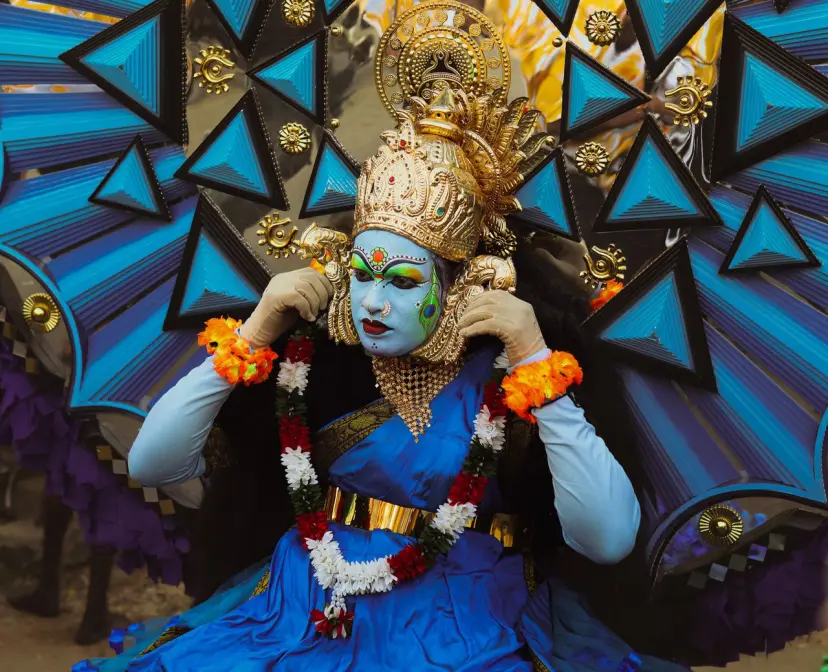
If Onam is Kerala's biggest festival by cultural reach, Thrissur Pooram is its biggest single-day spectacle. Held annually at the Vadakkunnathan Temple in Thrissur — the city widely nicknamed Kerala's "cultural capital" — it's a one-day event that draws lakhs of visitors for a combination of massed elephant processions, thunderous percussion, and a level of civic pride that turns the entire city into a festival ground for the day.
This guide covers where the festival came from, what actually happens, and how to plan a visit around it.
Where and When
Thrissur Pooram is held at Thekkinkadu Maidanam, the open ground surrounding the Vadakkunnathan Temple in the center of Thrissur city, on the Pooram asterism (nakshatra) in the Malayalam month of Medam — which corresponds to April in the Gregorian calendar.
The 2026 edition was held on April 27, 2026 — the 230th Pooram in the festival's continuous history. The next edition is confirmed for April 17, 2027, a date jointly set by the two temples that organize the festival. Because the date follows the Malayalam calendar rather than a fixed Gregorian date, always confirm the current year's exact date closer to your travel dates rather than relying on "usually April."
The History Behind It
Thrissur Pooram was established in the late 18th century (1796) by Sakthan Thampuran, the Maharaja of the erstwhile princely state of Cochin. Before this, Arattupuzha Pooram had been considered Kerala's most important temple festival — but when heavy rains prevented several temples from participating one year, those excluded temples approached the Maharaja, who responded by creating an entirely new, larger, more inclusive festival that brought multiple temples together under one event rather than favoring any single one.
That founding idea — unity across temple traditions rather than competition between them — is still central to how the festival works today. Ten temples surrounding Vadakkunnathan Temple ceremonially arrive to pay respects to Lord Shiva as part of the festivities, and the event is often described as a demonstration of unity across religious and community lines rather than a purely devotional occasion for one temple alone.
What Actually Happens
Thrissur Pooram unfolds over several days, though the main event is concentrated into one long day and night:
Kodiyettam (flag hoisting) — takes place roughly a week before the main event, marking the official start of the festival period.
Elephant processions — the festival's signature image. Around 100 caparisoned elephants participate across the full event, with the two main participating groups — representing the Paramekkavu and Thiruvambady temples — each fielding a row of richly decorated elephants that face off across the temple grounds.
Panchavadyam and Chenda Melam — massed traditional percussion performances, built around Kerala's chenda drum, performed beneath and around the elephant lineups. The Ilanjithara Melam, a specific percussion performance held at a named spot within the temple grounds, is one of the most anticipated single moments of the day.
Kudamattom — the festival's most visually iconic ritual: a rapid, rhythmic exchange of brightly colored ceremonial parasols (kudas) atop the elephants, timed to the percussion and met with roaring crowd reaction each time a new parasol design is revealed.
Fireworks — traditionally a late-night or early-morning finale, though it's worth knowing that the exact fireworks arrangements can change year to year for safety reasons (the 2026 edition, for instance, scaled back its fireworks display following a storage-facility incident). Don't assume every year's celebration follows an identical format — check current-year specifics as your visit approaches.
Upacharam Cholli Piriyal (farewell ritual) — the festival's closing ceremony, where the deities of the two main participating temples symbolically face each other and exchange a formal farewell before the elephants are led away, marking the end of the day's events.
Combine a Thrissur Pooram trip with the rest of Kerala. See our Kerala Honeymoon Packages for full itineraries.
Why It's Considered "The Mother of All Poorams"
Thrissur Pooram isn't Kerala's oldest temple festival, but it's widely regarded as the standard-setter for scale and organization — the event other, smaller "pooram" festivals across Kerala are often compared against. The precision involved (percussion timed to the second, elephant positioning coordinated across two competing temple groups, and a schedule that hasn't fundamentally changed in over two centuries) is as much a part of the draw as the spectacle itself.
Planning a Visit
Book accommodation well ahead. Thrissur's hotels fill up fast in the weeks before the festival, and prices rise accordingly — this is one of the two or three biggest single-draw events on Kerala's entire festival calendar.
Expect heat and long hours on your feet. The festival runs across a full day and into the night, largely outdoors, during April — light, breathable clothing and comfortable footwear matter more than anything else you pack.
The best vantage points fill up early. If the elephant procession and Kudamattom are your priority, arrive well before the scheduled start rather than expecting to find a clear view later in the day.
Getting there: Thrissur is well connected by rail (Thrissur railway station is centrally located) and by road from Kochi, roughly 1.5–2 hours away, making it a very manageable day trip or short stay if you're already routing through central Kerala.
Pair it with nearby Kerala destinations rather than treating it as a standalone trip — Kochi's proximity makes it easy to combine a Thrissur Pooram visit with a few additional days elsewhere in the state.
Final Thought
Thrissur Pooram is one of those events that photographs well but still undersells the experience — the scale of a hundred elephants, the physical force of massed percussion, and a crowd that's been showing up for over two centuries running are things that genuinely register differently in person. If your Kerala trip can be timed around it, it's worth building the rest of the itinerary around this one day rather than the other way around.
Frequently asked questions
How many elephants take part in Thrissur Pooram?
What does "Pooram" mean?
What is Kudamattom?
Is Thrissur Pooram the same as Onam?
When is the next Thrissur Pooram?
About the author
Amit Aswal
Amit Aswal writes TravelBudie, drawing on years working in travel and hospitality and on trips he plans and takes himself. Destination guides and itineraries are based on firsthand travel. Visa, entry and regulatory guides are researched against official government sources and re-verified on a published schedule, and each one shows the date it was last checked.
Stay in the loop
Enjoy our travel stories? Add Travelbudie as a preferred source on Google.
You'll see more of our guides and tips when you search for travel inspiration.
Add as a preferred source on GoogleYour trip, your way
Ready to turn inspiration into an itinerary?
Tell us your dates, budget, and travel style — our team will craft a personalised trip plan built around what matters to you.
Your trip, your way
Ready to turn inspiration into an itinerary?
Tell us your dates, budget, and travel style — our team will craft a personalised trip plan built around what matters to you.
Travel inspiration
Get guides & deals in your inbox
Destination tips, seasonal itineraries, and exclusive offers — no spam, unsubscribe anytime.