Badrinath God, Idol, and Sacred Darshan
For most pilgrims visiting Badrinath, the questions are straightforward: Which god is worshipped here? What does the idol look like? And what actually happens during darshan?
Badrinath God, Idol, and Sacred Darshan
For most pilgrims visiting Badrinath, the questions are straightforward: Which god is worshipped here? What does the idol look like? And what actually happens during darshan?
This guide answers those questions clearly, focusing on the deity of Badrinath, the form of the idol inside the temple, and the experience of darshan that defines this sacred yatra.
Who Is Worshipped at Badrinath?
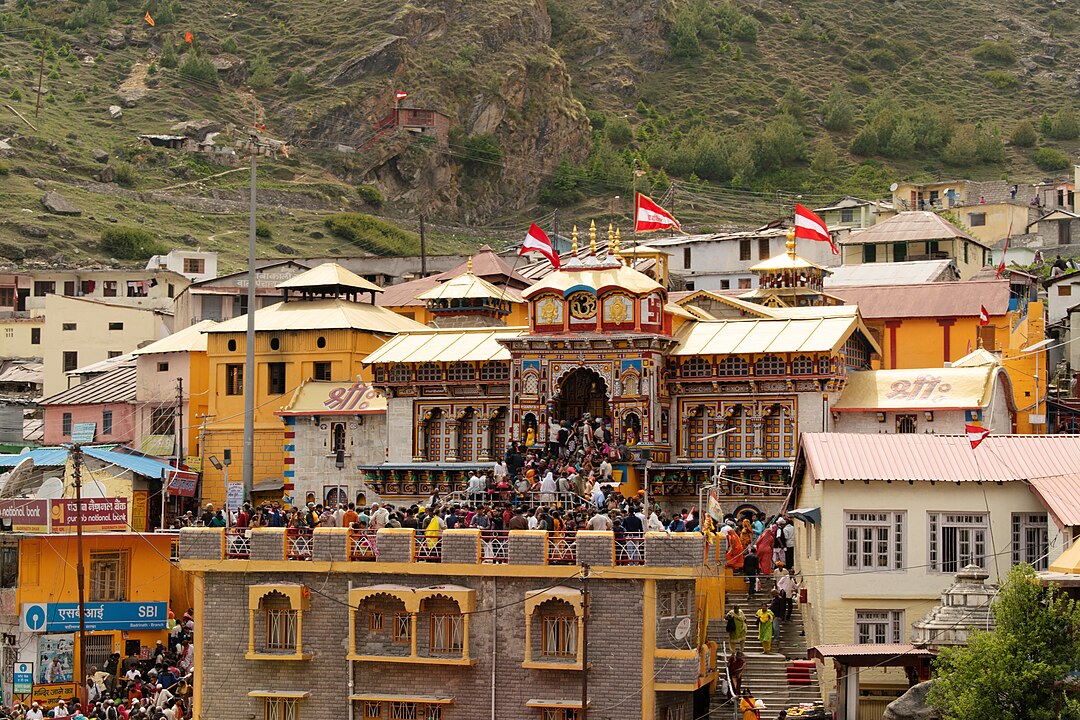
The main deity of Badrinath Temple is Lord Vishnu, worshipped as Badri Narayan.
According to Hindu tradition, Lord Vishnu chose the region of Badarikashram for deep meditation. Texts such as the Vishnu Purana and Skanda Purana describe this place as a seat of penance, where Vishnu performed tapasya for the welfare of the world. Because of this association, Badrinath became one of the most important Vishnu temples in India.
Names such as Badri Narayan, Badri Vishal, and Badrinath Bhagwan all refer to this same form of Lord Vishnu.
The Badrinath Idol: Form and Appearance
The idol worshipped at Badrinath is carved from black Shaligram stone and stands about one meter tall. Lord Vishnu is shown seated in padmasana, the lotus posture associated with meditation and inner discipline.
This seated form is unusual when compared to many other Vishnu temples, where the deity is often shown standing. At Badrinath, the posture reflects Vishnu’s role as a meditating ascetic in the Himalayas rather than a royal protector alone.
The idol is dressed daily in silk garments and adorned with ornaments according to ritual tradition and seasonal changes. During major festivals, the decorations become more elaborate, though photography inside the sanctum remains restricted.
What Badrinath Bhagwan Images Represent
Most authentic images of Badrinath Bhagwan show Vishnu seated calmly, holding traditional symbols such as the conch (shankha) and discus (chakra). The expression and posture emphasize restraint, balance, and spiritual focus rather than grandeur.
Because photography inside the inner sanctum is regulated, genuine images usually come from temple authorities, government tourism departments, or established pilgrimage publications. Images claiming to show unrestricted views inside the sanctum should be treated with caution.
Murti Darshan at Badrinath
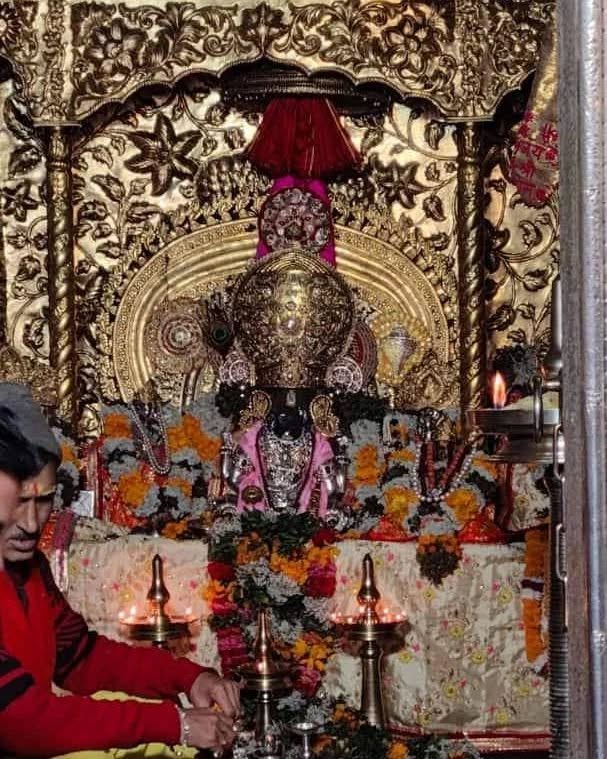
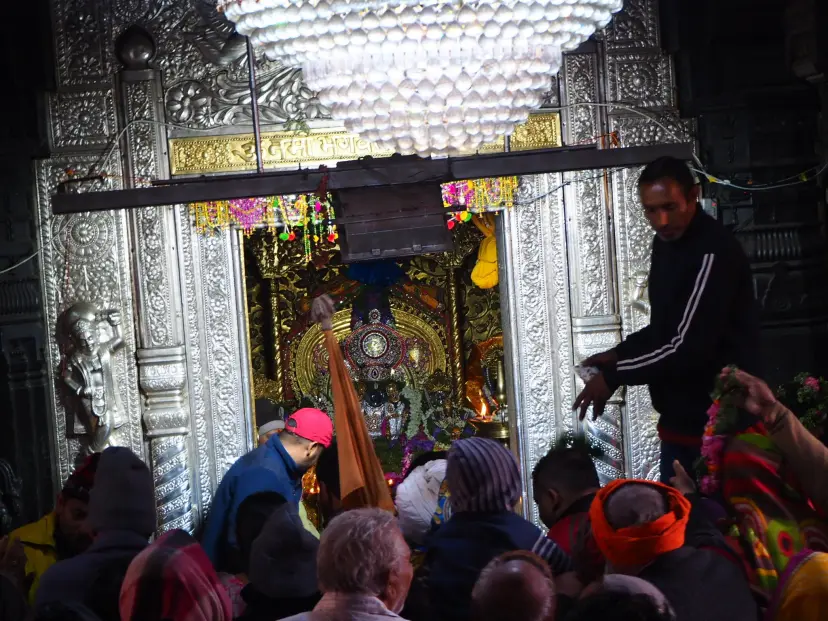
Darshan of the murti is the heart of the Badrinath pilgrimage. Devotees move through the temple and briefly stand before the idol in the sanctum, offering prayers and receiving blessings.
Daily worship follows a fixed rhythm that includes:
- Morning abhishek
- Decorative alankar
- Evening aarti
- Night shayan aarti
Unlike some major temples where distance separates devotees from the deity, Badrinath allows relatively close darshan. Many pilgrims describe the experience as quiet and intense rather than dramatic, shaped by the silence of the surrounding mountains and the simplicity of the ritual moment.
Garbh Grah Darshan
The garbh grah, or inner sanctum, is where the idol of Badri Narayan is installed. Darshan here is considered especially auspicious because it is the most direct encounter with the deity.
Entry is tightly regulated, rituals are strictly observed, and photography is completely prohibited. The emphasis remains on focus and reverence rather than spectacle. Pilgrims often describe this darshan as calming and deeply personal.
Presence of a Shivling in Badrinath
Alongside Vishnu worship, Badrinath Temple also houses a Shivling within the temple complex.
This reflects the long-standing harmony between Vaishnava and Shaiva traditions in Himalayan pilgrimage culture. Devotees commonly offer prayers to both Vishnu and Shiva during their visit, seeing the shrine as a place of balance rather than division between paths of devotion.
Why Darshan at Badrinath Feels Different
Badrinath stands apart because of its combination of:
- A meditative form of Vishnu
- The presence of Shiva worship
- A remote Himalayan setting that shapes the entire experience
For many pilgrims, the visit is less about visual spectacle and more about stillness. Standing before the idol of Badri Narayan, surrounded by ritual silence and mountain air, often leaves a lasting impression of clarity and inward focus. This year you can visit Sri Badrinath Dham In April 2026, The Badrinath Temple will open on Thursday, 23 April at 6:15 A.M this year. Badrinath is not just a destination. For those who undertake the journey, it becomes a pause — brief, demanding, and deeply meaningful.
About the author
Krishna Murari
Stay in the loop
Enjoy our travel stories? Add Travelbudie as a preferred source on Google.
You'll see more of our guides and tips when you search for travel inspiration.
Add as a preferred source on GoogleYour trip, your way
Ready to turn inspiration into an itinerary?
Tell us your dates, budget, and travel style — our team will craft a personalised trip plan built around what matters to you.
Your trip, your way
Ready to turn inspiration into an itinerary?
Tell us your dates, budget, and travel style — our team will craft a personalised trip plan built around what matters to you.
Travel inspiration
Get guides & deals in your inbox
Destination tips, seasonal itineraries, and exclusive offers — no spam, unsubscribe anytime.