Valley of Flowers - A complete Guide
There are places you visit … and then there are places that stay with you long after you’ve returned.
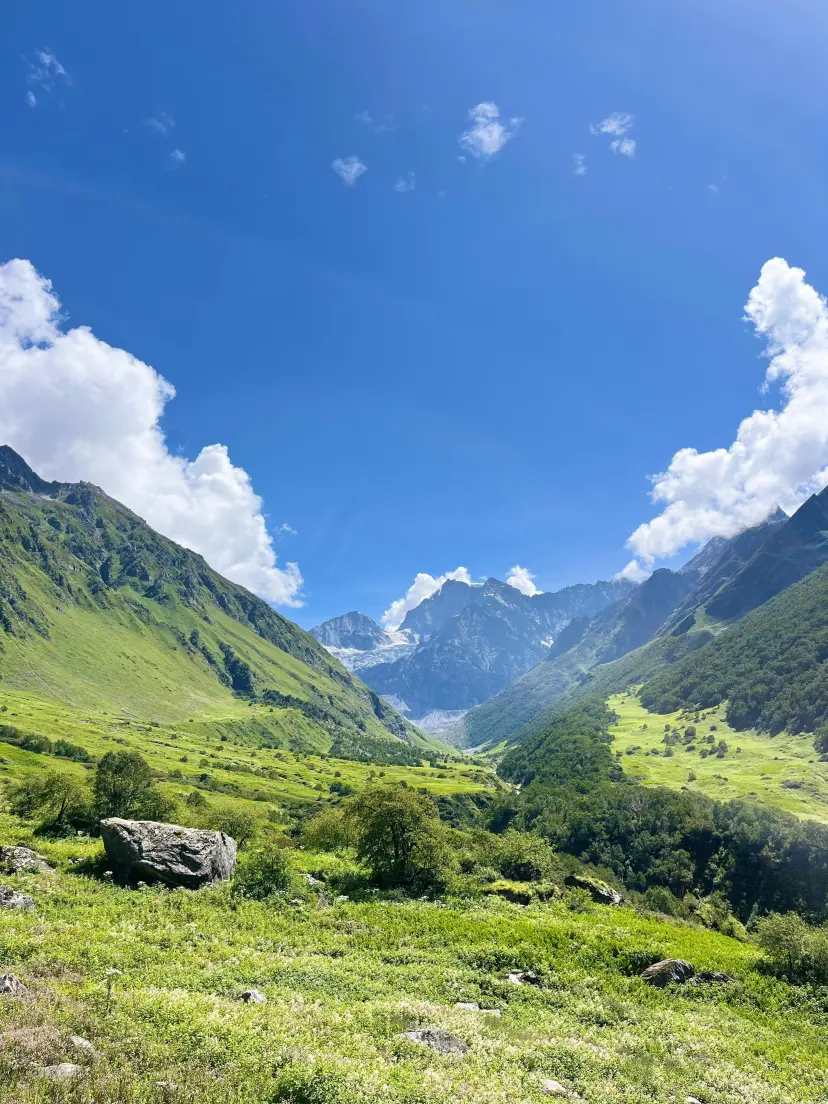
There are places you visit… and then there are places that stay with you long after you’ve returned.
The Valley of Flowers in Uttarakhand is one of those rare destinations that doesn’t just please the eyes — it stirs the soul.
Nestled deep in the Chamoli district, hidden behind mist-covered mountains, the Valley of Flowers National Parkblooms like a dream for just a few months every year. When the monsoon paints the Himalayas in fresh greens, the valley bursts into life with hundreds of wildflowers — blue poppies, brahmakamal, anemones, primulas and flowers whose names you may never learn, but whose colours will remain etched in your memory.
This is not just a place; it is poetry in motion.
Let me take you through it.
The Legend, the Land & the First Glimpse
Locals often tell a tale that the area is connected with Hanuman and the Sanjeevani Booti from the Ramayana. While the exact historical location isn’t known, the valley’s rich medicinal flora and breathtaking beauty have inspired these stories for generations. When you step into the valley after a morning trek from Ghangaria, and the clouds part slowly like curtains from a heavenly play, you understand why such legends exist.
The air is crisp, the river whispers beside you, and the ground under your feet feels soft like a natural carpet. The valley’s almost spiritual beauty makes it unforgettable.
A Valley Known by Many Names Across India
Before we go deeper into Uttarakhand’s valley, a quick note:
India has a few places nicknamed "Valley of Flowers", but only one is the official UNESCO site.
Valley of Flowers Uttarakhand (the real one)
A world-famous alpine valley accessible only by trekking — the one we’re exploring here.
Khirai Valley of Flowers, West Bengal
Endless stretches of chrysanthemums that turn winter mornings magical — a photographer’s delight.
Valley of Flowers Udaipur, Rajasthan
A beautifully curated garden filled with seasonal blooms — perfect for families exploring Udaipur.
But once you trek the Uttarakhand valley, every other valley feels like an introduction — this one is the textbook itself.
How to Reach: Haridwar to Valley of Flowers Distance
To truly enjoy this journey, consider the route part of the experience:
Haridwar → Rishikesh → Rudraprayag → Karnaprayag → Joshimath → Govindghat → Ghangaria → Valley of Flowers
-
Haridwar to Govindghat distance: ~300 km
-
Travel time: 10–12 hours
-
Govindghat to Ghangaria trek: 9–10 km
-
Ghangaria to Valley of Flowers trek: 4 km one way
The roads wind through the Ganga, Alaknanda, and Pushpawati rivers — a scenic feast at every turn.
Valley of Flowers Trek Experience (Trek Time, Difficulty & Vibe)
The trek from Govindghat to Ghangaria is a journey in itself.
You’ll find:
-
Waterfalls so huge they splash mist onto the trail
-
Mules and porters moving rhythmically
-
Pilgrims heading to Hemkund Sahib
-
Forests dense enough to silence your thoughts
The trek time from Govindghat to Ghangaria takes around 5–7 hours, depending on your pace.
Once in Ghangaria, spend the night listening to the sound of the river. The next morning, you begin the walk into the heart of the valley.
The Valley of Flowers trek itself is gentle, with a 4 km trail that slowly opens into the iconic meadows. The colors, the silence, and the unexpected peace leave a lasting impression.
Best Time to Visit Valley of Flowers (Month-by-Month Guide)
The valley is open only from June to October, each month offering its own charm:
Valley of Flowers in June
-
Snow starts melting
-
The valley has few flowers but fresh greenery
-
Perfect for those who want fewer crowds
Valley of Flowers in July
-
Flowering begins beautifully
-
Rainfall increases, enhancing the lushness
-
Monsoon clouds create dreamy landscapes
Valley of Flowers in August — The Best Time
If there is one month to recommend above all, it is August.
-
Every inch of the valley blooms
-
Streams overflow with crystal water
-
Mist dances around the mountains
-
The valley turns pink, purple, yellow, blue
Valley of Flowers in September
-
Skies clear up
-
Fewer flowers but better mountain views
-
Best for trekkers who prefer calm over color
Valley of Flowers in October
-
Valley closes mid-October
-
Temperature drops drastically
Valley of Flowers Timing & Entry Rules
-
Opening time: 7 AM
-
Last entry: 2 PM
-
Closing time: 5 PM
-
No camping allowed inside
-
You must return to Ghangaria the same day
Permits Required
-
Every visitor must obtain a forest permit at the Ghangaria check post
-
Valid for 3 days
-
Required for both Indian and foreign tourists
-
Government ID is necessary for issuance
-
Photography is allowed, but drones are prohibited
These rules are strictly enforced to protect the fragile ecosystem.
The Valley’s Season of Life
The Valley of Flowers season is short, but that’s what makes it so precious. For three months, nature performs its most colorful ballet, and visitors are lucky to witness it.
Whether trekking, photographing, enjoying spirituality, or simply seeing something breathtaking, the valley rewards every kind of traveler.
A Helpful Insight for Your Visit
Start early. Reach the meadows before the sun rises fully. Sit quietly, listen to the river, and watch the flowers sway in the Himalayan breeze. In that moment, the valley’s magic becomes unforgettable.
Final Thoughts
The Valley of Flowers Uttarakhand is more than a destination — it’s a reminder of how beautifully nature heals, how the mountains hold stories older than history, and how a single trek can change the way you see the world.
If you ever needed a sign to visit this paradise, consider this your sign.
About the author
Vikas Rawat
Stay in the loop
Enjoy our travel stories? Add Travelbudie as a preferred source on Google.
You'll see more of our guides and tips when you search for travel inspiration.
Add as a preferred source on GoogleYour trip, your way
Ready to turn inspiration into an itinerary?
Tell us your dates, budget, and travel style — our team will craft a personalised trip plan built around what matters to you.
Your trip, your way
Ready to turn inspiration into an itinerary?
Tell us your dates, budget, and travel style — our team will craft a personalised trip plan built around what matters to you.
Travel inspiration
Get guides & deals in your inbox
Destination tips, seasonal itineraries, and exclusive offers — no spam, unsubscribe anytime.